
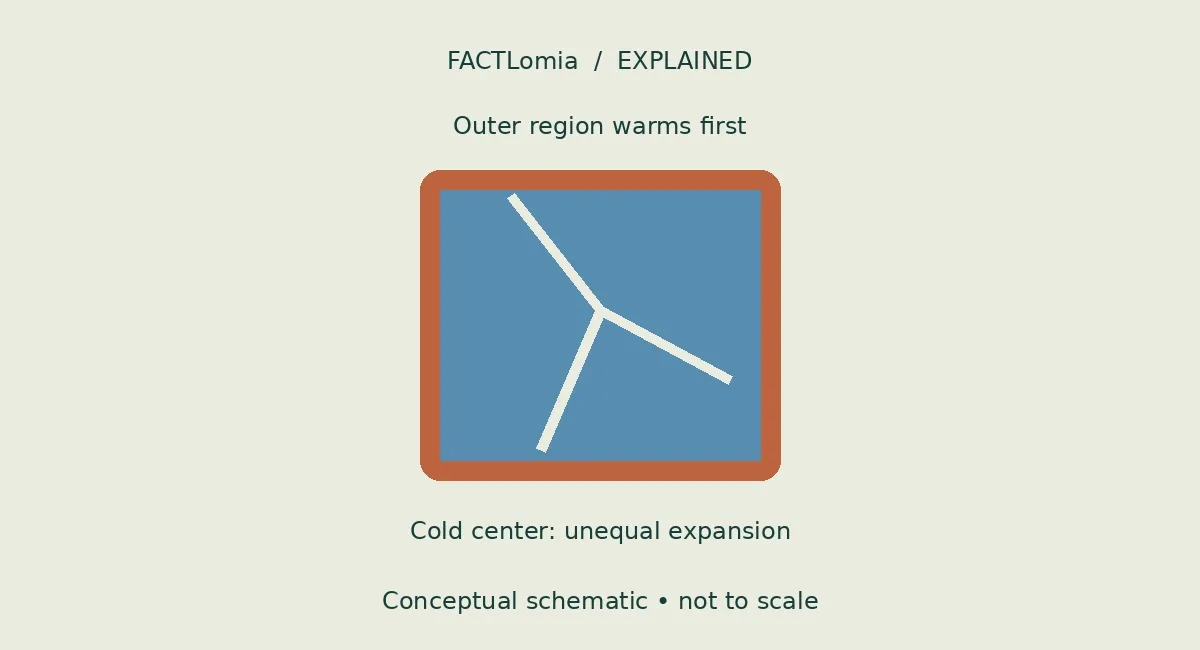
Ice cubes often crack in water because the outside warms and expands before the colder center can respond. This uneven change creates thermal stress in brittle ice. The sharp sound can therefore occur before much of the cube has melted.
The surface and center change at different rates
A freezer-cold cube and a drink can have a large temperature difference even when the drink feels cool to your hand. Heat enters the surface first and takes time to conduct inward. The outer and inner regions try to change size differently, producing stress that can open fractures. [1]
This is different from a freezing bottle
Water expands substantially when it changes from liquid into ordinary ice. That is why freezing a sealed, full container can cause problems. A cube cracking in a drink is already solid: the immediate explanation is uneven warming within that solid, not a new round of water freezing inside it. These two effects are often mixed together in casual explanations. [1]
Why two cubes may behave differently
Initial temperature, size, existing flaws, and the drink’s temperature all affect the result. To compare fairly, use similar cubes and the same amount of water. A cube allowed to warm slightly in a dish may experience a smaller temperature jump than one taken straight from the freezer. This is a prediction from the thermal-stress explanation, not a guarantee that every cube will stay intact.
Does cracking mean the ice is dirty?
No. A visible fracture by itself is not a test for contamination. It records a mechanical failure of the ice.
Does ice crack only in hot water?
No. Water can be much warmer than freezer-cold ice without being hot. The temperature difference and how quickly warming occurs are what matter.
Keep exploring
Continue with How Can Water Stay Liquid Below Freezing? and Why Does Tempered Glass Break Into Small Pieces?.
Sources and evidence
- University of Illinois — Ice crackling in a beverage ↗
Thermal stress and the distinction from expansion during freezing.
Sources consulted: 15 October 2026. Written with AI assistance and checked against the linked references; not independently reviewed by a subject specialist. Sources do not endorse this article. See our editorial policy.
Revision: Initial publication; factual claims checked against linked sources.