
 Space
SpaceWhat causes auroras? How the northern lights get their colours
Discover how solar activity powers auroras, why oxygen and nitrogen produce different colours, and why a forecast cannot guarantee a sighting.
Amazing facts, deeper stories and extraordinary ideas from science, space, history, nature and the mysteries of our world.
Explore more › SCIENCE
 NATURE
 HISTORY
Small discoveries. Big “I had no idea” energy.
SpaceDiscover how solar activity powers auroras, why oxygen and nitrogen produce different colours, and why a forecast cannot guarantee a sighting.
NatureThe ocean is not blue only because it reflects the sky. Learn how water absorbs light and why sediment, algae and shallow sand change its colour.
ScienceFollow photosynthesis from absorbed light to carbohydrates. Learn where the carbon and released oxygen come from, and what the familiar equation leaves out.
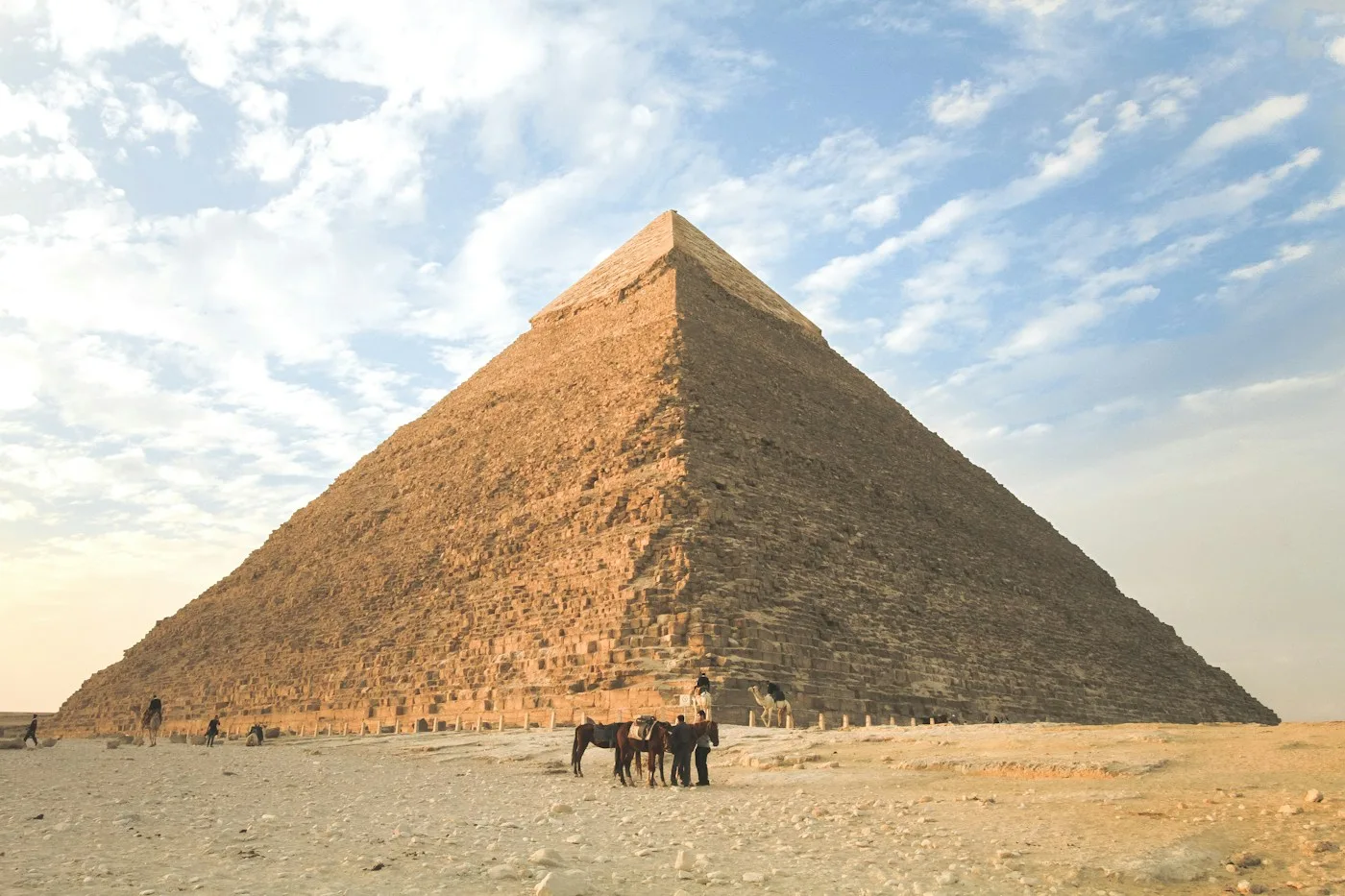
HistoryGiza’s pyramids once had outer casing stones. Compare evidence for Khufu, Khafre and Menkaure, including white limestone and granite finishes.
 Space
SpaceVenus rotates in about 243 Earth days and orbits in 225, but its solar day is about 117. Understand the difference with a simple calculation.
NatureTrace ocean salt from weathered rocks to rivers and the seafloor. Understand why evaporation leaves salts behind and what 35 parts per thousand means.
ScienceUnderstand how air scatters sunlight, why sunsets change colour, and how the blue sky differs from blue seawater and glowing auroras.
NatureClouds seem to defy gravity, but their tiny droplets, rising air and slow falling speed explain why they remain suspended.
SpaceEarth’s atmosphere bends starlight in shifting pockets of air. Learn why distant stars shimmer while nearby planets usually look steadier.
SpaceThe Moon does not physically grow near the horizon. The famous moon illusion comes from how the brain interprets its position and surroundings.
SpaceEarth rotates rapidly, yet people do not feel the motion. The reason is constant motion, shared speed and gravity.
NatureThat earthy smell has a name: petrichor. Learn how plant oils, soil compounds and raindrops create the scent people notice before or during rain.
NatureWhales must keep breathing consciously. Their unusual sleep strategy lets them rest while staying able to surface for air.
NatureA desert can be scorching by day and surprisingly cold after sunset. Low humidity, clear skies and sparse vegetation explain the rapid change.
NatureRare volcanic lakes can hold enormous amounts of dissolved carbon dioxide. A sudden disturbance may let the gas escape in a dangerous overturn.
SpaceWithout Earth’s usual compression, the spine can lengthen temporarily in orbit. The effect reverses after astronauts return.
NatureSome birds, insects and other animals detect ultraviolet wavelengths that humans cannot see. Learn what this hidden information is used for.
ScienceLight reaches your eyes almost instantly, while thunder travels through air at about the speed of sound. The delay reveals the storm’s distance.
NatureGreen chlorophyll breaks down as daylight and temperature change. Other pigments become visible, while some leaves manufacture red pigments before falling.
ScienceWater expands as it freezes because hydrogen bonds arrange molecules into an open crystal structure. The solid becomes less dense than the liquid beneath it.
ScienceFinger ridge patterns form before birth through genetics and tiny differences in the womb. Even identical twins develop distinct details.
ScienceA kernel contains a small amount of water sealed inside a hard shell. Heating turns that water into steam until pressure ruptures the hull and expands the starch.
ScienceCutting an onion breaks cells and lets enzymes create a volatile irritant. It reaches the eye, dissolves in tears and triggers a protective reflex.
ScienceAt the same room temperature, metal draws heat from your hand faster than wood because it conducts heat far more efficiently. The sensation measures heat flow, not temperature alone.
ScienceSteel and concrete expand when heated and contract when cooled. Expansion joints give the structure room to move without buckling or cracking.
ScienceSound reflects from hard, distant surfaces. A distinct echo occurs when the reflected sound arrives late enough for your brain to separate it from the original.
NatureA reflective layer behind the retina sends unused light back through the eye, increasing sensitivity. It also creates the visible eye-shine seen in headlights or a camera flash.
SpaceGravity curves spacetime. Near a black hole, that curvature can redirect passing light, create distorted images and sometimes form an Einstein ring.
SpaceThe Moon’s weak gravity and lack of strong global magnetic protection let gas escape more easily. It has an extremely thin exosphere rather than Earth-like air.
SpaceSaturn’s rings are broad, bright bands of ice and rock particles. Their size, reflectivity and contrast against space make them visible even through modest telescopes.
ScienceGPS receivers compare precise time signals from several satellites. The differences reveal distances, and geometry converts those distances into a position on Earth.
SpaceSolar wind and sunlight push material away from a comet’s nucleus. The tail follows the outward direction of those forces, so it can point differently from the comet’s path.
NatureMagma rises because it is buoyant and contains expanding gases. Pressure, fractures and magma supply determine whether an eruption is gentle or explosive.
NatureThe Moon’s gravity pulls unevenly on Earth’s oceans, while the Sun adds a smaller effect. Earth’s rotation carries coastlines through bulges and tidal basins.
NatureHoney is low in available water, acidic and rich in sugars. Those conditions slow or stop many microbes, although contamination and moisture can change its stability.
NatureMany bats emit ultrasonic calls and analyse returning echoes. Timing and frequency changes reveal distance, shape and movement even when vision is limited.
HistoryBurial, mineral-rich water and low oxygen can replace or fill bone structure. Fossilisation is rare and depends on geology, time and later exposure.
Explore a subject, one question at a time.
We explore the remarkable, explain the unexpected, and keep a clear line between what we know and what we’re still figuring out.