
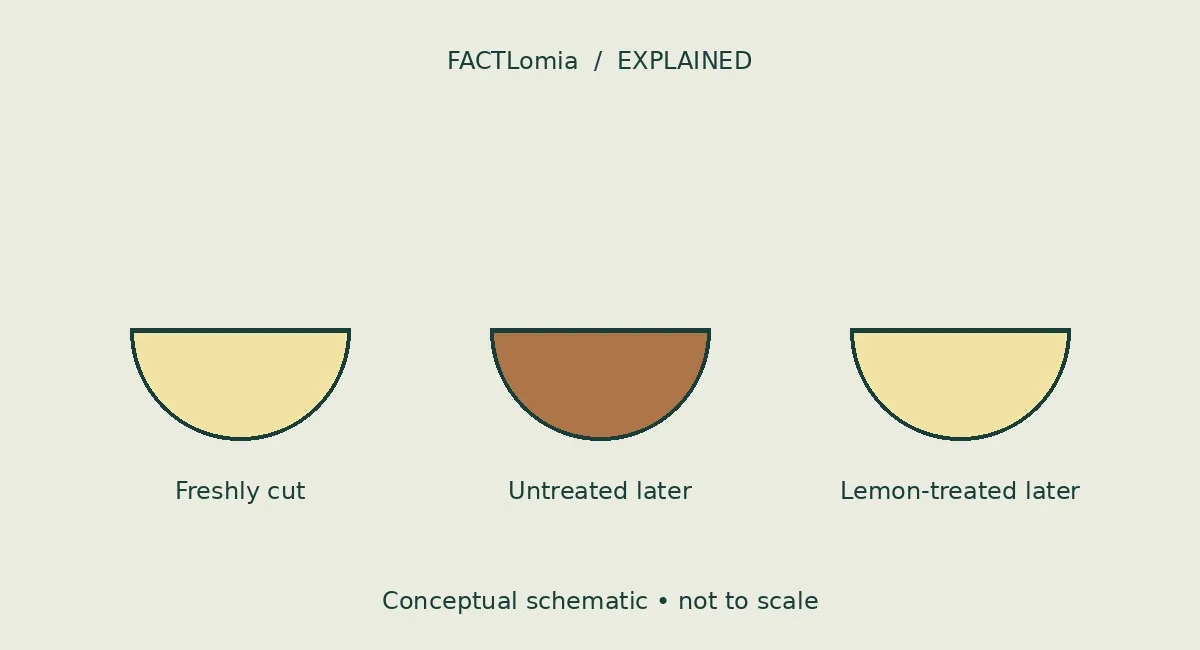
Cut apples turn brown mainly because damage brings an enzyme called polyphenol oxidase into contact with plant compounds and oxygen. The reaction produces substances that develop into brown pigments. Lemon juice can slow this process through acidity and its antioxidant content.
Cutting changes what can mix
In intact fruit, cellular structures keep many ingredients of the browning reaction apart. A knife or bruise disrupts those boundaries. At the exposed surface, oxygen becomes available and the enzyme helps transform phenolic compounds. This is a chemical change in the apple, rather than dirt appearing on the slice. [1, 2]
What lemon juice changes
Lowering the surface pH can reduce enzyme activity, while ascorbic acid can interrupt the chain leading to visible browning. Treatment delays the color change rather than making the slice permanently resistant to oxygen. Different apples brown at different rates, so a comparison should use slices from the same fruit. [2, 3]
An easy kitchen comparison
Put two similar slices on a plate. Treat one with a little lemon juice and leave the other untreated. Photograph both under the same light over time. The comparison demonstrates a treatment effect; it does not isolate acidity from vitamin C because lemon juice changes both at once. A controlled scientific experiment would vary those factors separately.
Is browning the same as rotting?
No. Enzymatic browning can begin soon after cutting. Color alone does not establish whether food is spoiled; handling and storage still matter.
Why can a bruised apple brown inside?
Bruising can damage cells without opening the skin widely. The same mixing of previously separated ingredients can occur in the damaged tissue. [1]
Keep exploring
Continue with Why Does Iron Rust? Oxygen and Water Start an Electrochemical Reaction and Why do onions make you cry?.
Sources and evidence
- UW–Madison — Why apple slices turn brown ↗
Cell damage and enzymatic oxidation.
- University of Missouri — Non-browning apples ↗
Browning chemistry and variation.
- University of Nebraska–Lincoln — Prevent cut-fruit browning ↗
Practical methods for slowing discoloration.
Sources consulted: 15 October 2026. Written with AI assistance and checked against the linked references; not independently reviewed by a subject specialist. Sources do not endorse this article. See our editorial policy.
Revision: Initial publication; factual claims checked against linked sources.