
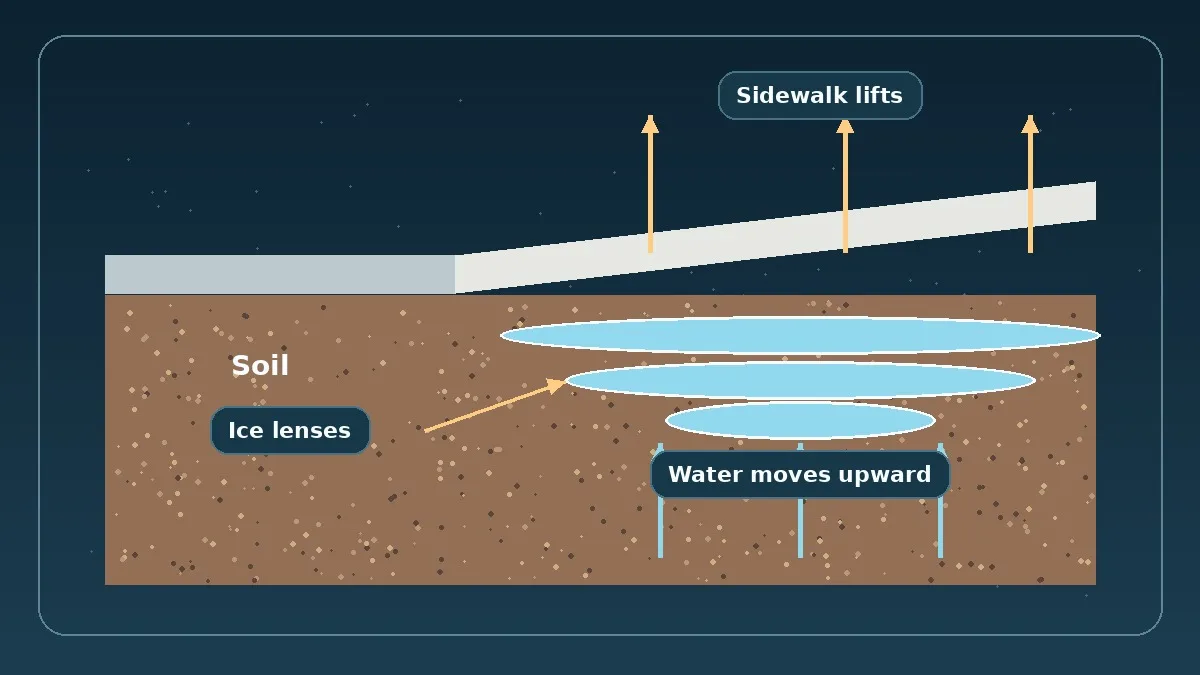
Frost heave happens when water moves through suitable soil toward a freezing zone, where it accumulates as layers of ice called ice lenses. As these lenses grow, they push the soil and structures above them upward. Cold temperatures, available water and a frost-susceptible soil must occur together.
A freezing front develops below ground
As the ground loses heat, freezing can extend downward from the surface. Fine-grained soils with connected pores may allow liquid water to move toward the partly frozen zone. Freezing separates some of that water into layers of ice within the ground. [1] [2]
Ice lenses can keep growing
The familiar expansion of water as it freezes is only part of the story. A continuing water supply lets ice accumulate at the freezing front and form lenses much thicker than a single frozen pore. Those lenses displace the soil above them. The result can be uneven upward movement if soil or moisture conditions vary across a site. [1]
What happens when the ground thaws
In spring, melting ice lenses leave water behind. The wet soil can temporarily lose strength, particularly when drainage is restricted by deeper frozen ground. This cycle helps explain why pavements may lift during winter and settle unevenly after thaw. [1] [2]
Frequently asked questions
Does all frozen soil heave?
No. Frost susceptibility, moisture supply and freezing conditions determine whether significant heave develops.
Why can one sidewalk slab rise more than another?
Water availability, soil composition and temperatures can differ beneath neighboring slabs.
Sources and evidence
- U.S. Bureau of Reclamation — Frost Action in Soil Foundations ↗
Describes ice lens growth, differential heave and thaw weakening.
- USDA Natural Resources Conservation Service — Understanding Soil Risks and Hazards ↗
Three conditions for frost action and impacts on roads and structures.
Sources consulted: 24 November 2026. Written with AI assistance and checked against the linked references; not independently reviewed by a subject specialist. Sources do not endorse this article. See our editorial policy.
Revision: Initial publication. Factual claims checked against the cited sources.