
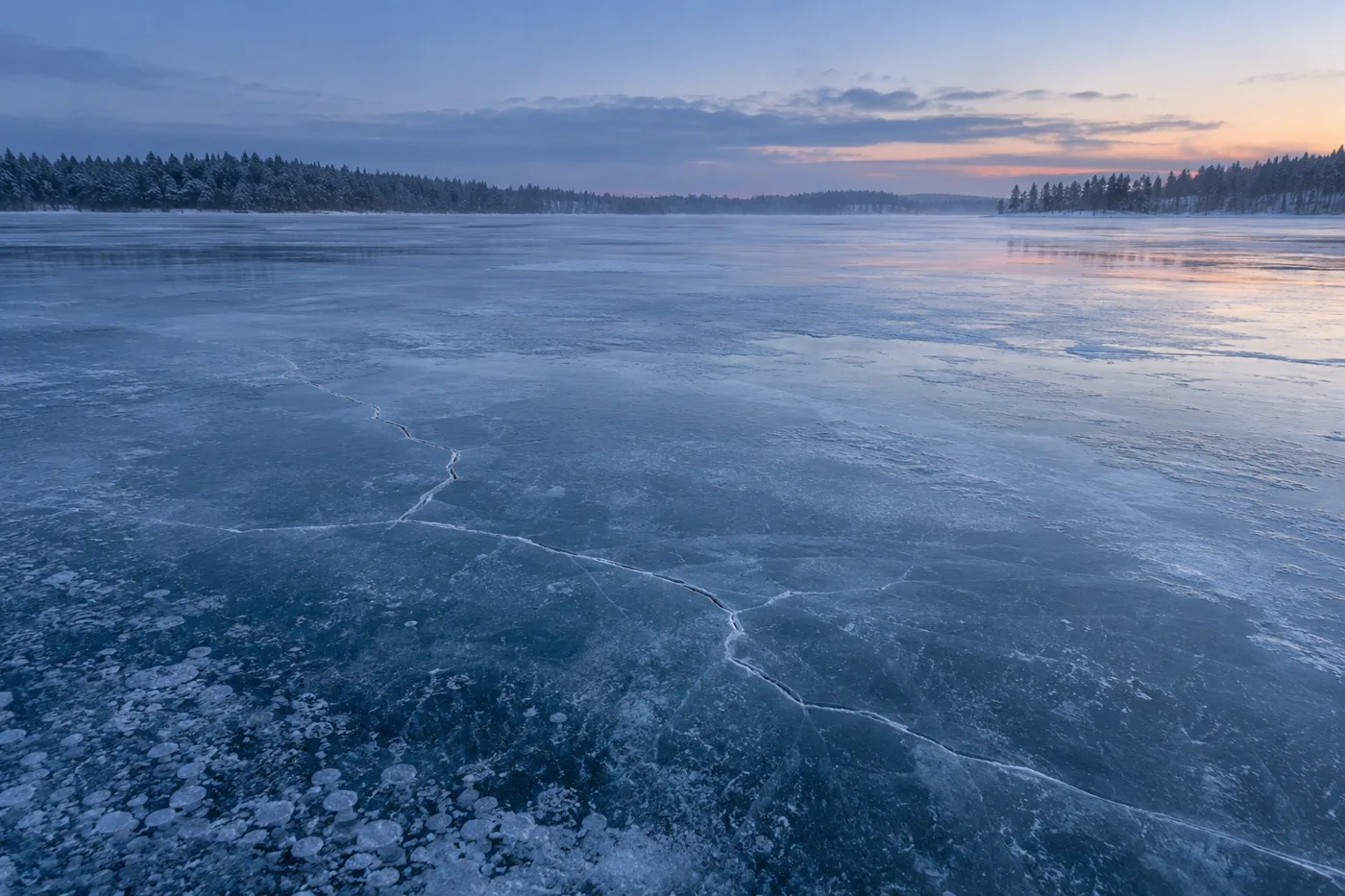
Frozen lake ice makes booming, popping, or singing sounds when temperature changes and water movement stress the ice sheet. Cracks release vibrations that travel through ice and water. The sound can seem like a laser or distant engine, but it is a physical response of the ice.
Ice changes size as temperatures shift
Lake ice expands as it warms and contracts as it cools. A broad sheet may be constrained by the shoreline, so temperature-driven movement builds stress. When ice cracks or sections shift, they release vibrations. Ice thickness, temperature, and support affect the sound.
Why a crack can sound like a song
Cracks send vibrations through a large sheet. Ice may resonate at different frequencies, producing a pop, hollow boom, or wavering tone. The National Park Service records wintertime sounds from Yellowstone Lake as the ice reacts to changing temperatures. USGS monitoring also detects icequakes on frozen lakes. [1][2]
A sound cannot tell you whether ice is safe
Ice sounds are not a safety test. Thickness varies around currents, inlets, outlets, plants, and snow-covered areas. Never use a sound or appearance alone to decide whether ice will support a person; follow local authorities and avoid unverified ice. Compare this with ice cubes cracking and water freezing.
Frequently asked questions
Frequently asked questions
Can lake ice really sing?
Yes. Cracks and vibrations in an ice sheet can create sustained, changing tones.
Does a boom mean the ice is unsafe?
A boom means ice is changing or vibrating, but it does not reveal thickness or safety.
Are frozen lake sounds caused by trapped gases?
Temperature-driven movement, cracking, and vibration explain many recorded sounds; details vary by lake and event.
Sources and evidence
- National Park Service — Singing Lake Audio Postcard ↗
Records lake-ice sounds and describes ice reacting to temperature changes.
- USGS — Lake-Ice Quakes at Newberry Volcano ↗
Describes seismic signals associated with cracking lake ice.
- USGS — Non-earthquake Signals in Yellowstone ↗
Notes that seismic networks record icequakes.
Sources consulted: 2026-10-18. Written with AI assistance and checked against the linked references; not independently reviewed by a subject specialist. Sources do not endorse this article. See our editorial policy.
Revision: Initial editorial draft prepared 18 October 2026; claims are tied to linked sources and retain stated limitations.