
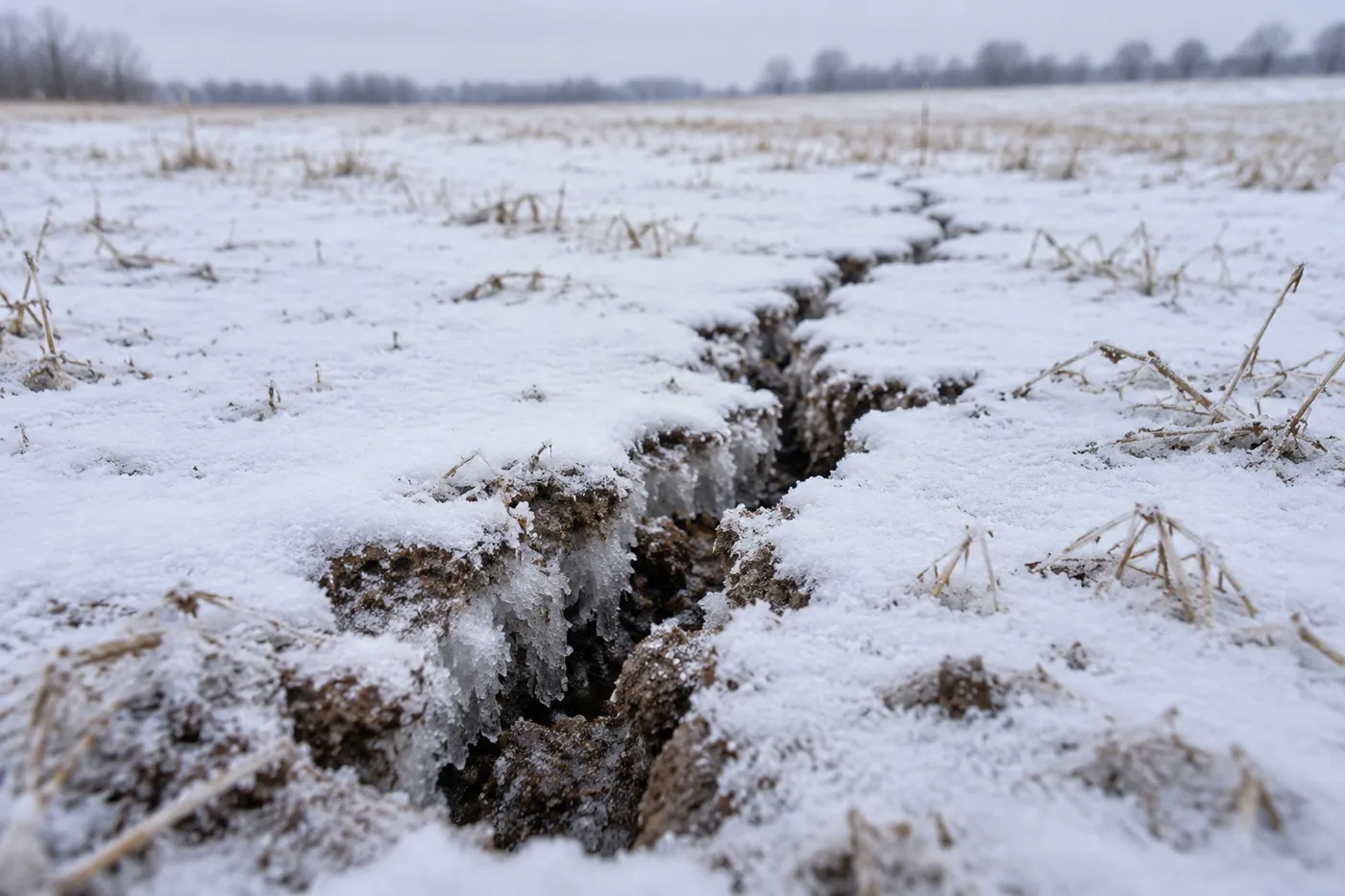
A frost quake, also called a cryoseism, is a sudden cracking event in shallow frozen ground. Water in soil or rock expands as it freezes. If freezing happens rapidly and the ground is confined, pressure can build until the material cracks, sometimes with a sharp boom. Frost quakes differ from tectonic earthquakes.
How frozen ground makes a boom
During a fast cold snap, shallow groundwater or wet soil can freeze and expand faster than the surrounding ground can accommodate. The crack may create a loud report and brief shaking. USGS notes that some booms during very cold weather are consistent with frost quakes, though many unexplained booms have other causes. [1]
Why conditions matter
Frost quakes are more likely when the ground is wet before a sudden freeze. Snow cover, soil moisture, drainage, and the rate of temperature change affect whether pressure builds. A person may hear a frost quake without feeling the rolling motion typical of a larger earthquake.
How they differ from tectonic earthquakes
A frost quake occurs close to the surface as freezing ground cracks. A tectonic earthquake comes from sudden movement along a fault or another geologic source. A boom alone cannot identify its cause; seismic records and local conditions help scientists distinguish signals. Compare cracks in ice cubes with the Moon’s moonquakes.
Frequently asked questions
Frequently asked questions
Are frost quakes dangerous?
Most are small and localized, though ground cracking can damage nearby surfaces. A sound alone cannot show the event’s cause or size.
Can a frost quake be mistaken for an earthquake?
Yes. Weather, seismic records, and reports from nearby locations help distinguish possible causes.
What is a cryoseism?
It is a term for seismic activity associated with freezing ground or other cold-related processes.
Sources and evidence
- USGS — Earthquake Booms, Seneca Guns, and Other Sounds ↗
Explains frost quakes as freezing groundwater expanding and cracking nearby ground.
- USGS — Non-earthquake Signals on the Yellowstone Network ↗
Shows that networks record non-tectonic signals including icequakes.
Sources consulted: 2026-10-18. Written with AI assistance and checked against the linked references; not independently reviewed by a subject specialist. Sources do not endorse this article. See our editorial policy.
Revision: Initial editorial draft prepared 18 October 2026; claims are tied to linked sources and retain stated limitations.