
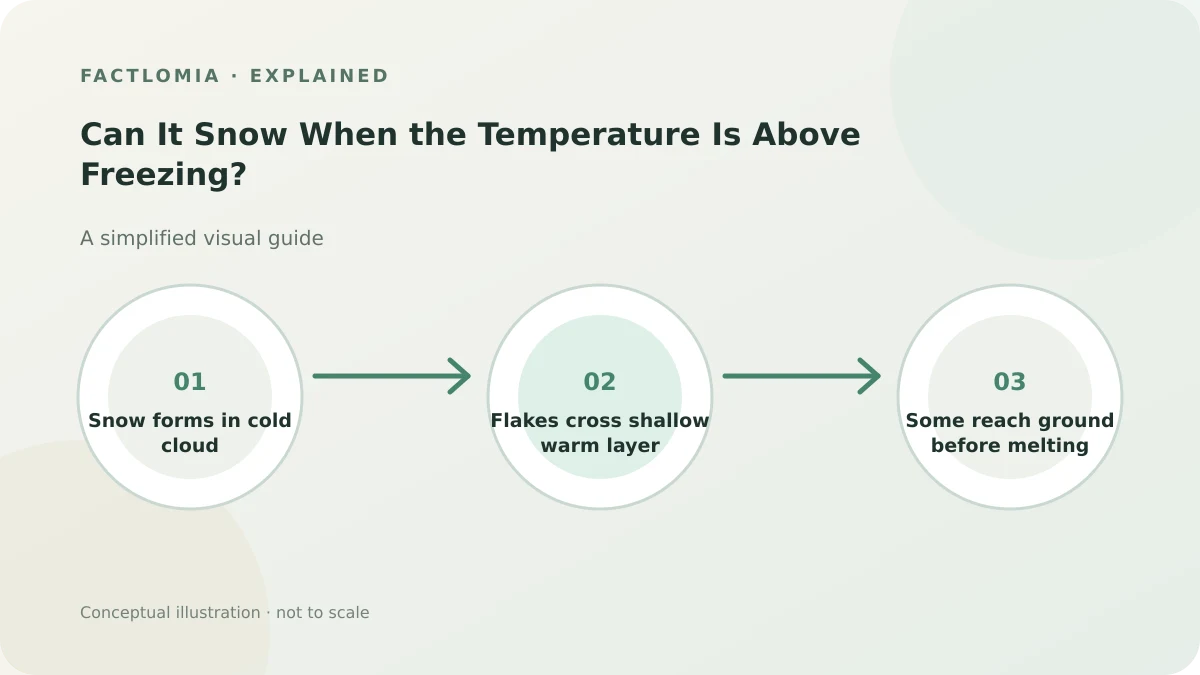
Yes. Snow can reach the ground when a thermometer reads a little above 32°F if flakes fall through a shallow or cool near-surface layer, or if evaporation cools the air. The temperature a weather app reports may also differ from conditions along the flakes’ path. Heavier snow melts more slowly than light flakes.
A surface reading does not describe every layer
Snowflakes form in cold clouds, but then fall through layers of air with different temperatures. The temperature at a standard observing height is only one point in that vertical profile. A shallow layer just above freezing may not provide enough time or warmth to melt every flake before it reaches the ground. [1]
Evaporation and snowfall rate can matter
When precipitation evaporates into relatively dry air, it can cool the air around it. This cooling may help preserve snow as it approaches the surface. Heavy, wet snowflakes also carry more ice and can take longer to melt completely than tiny flakes, although the outcome depends on the depth and warmth of the above-freezing layer. [2]
If the air layer is warm and deep enough, snow will melt into rain. If it melts aloft and then refreezes before reaching the surface, sleet may fall.
Why snow may melt after landing
Snow reaching the ground does not guarantee that it will accumulate. Warm pavement and ground can melt flakes on contact, while a prolonged snowfall or colder surfaces may allow accumulation. Elevation and local microclimates can also change the result over short distances.
Learn why flakes have their familiar shape in why snowflakes have six sides.
Frequently asked questions
Can snow fall at 40°F?
It is possible in unusual profiles, but increasingly warm or deep air layers make melting more likely. The full temperature profile matters more than one reading.
Why does a weather app say 34°F while snow is falling?
The reported surface temperature does not show every layer aloft or the exact temperature where flakes are melting.
Does snow always stick when it falls?
No. Ground and pavement temperatures, snowfall rate and duration determine whether it accumulates.
Sources and evidence
- National Weather Service — What Causes a Wintry Mix of Precipitation? ↗
How surface temperatures and warm layers affect snow, rain, sleet and freezing rain.
- National Weather Service — Determining Winter Precipitation ↗
Snow melting, precipitation growth and the vertical temperature profile.
Sources consulted: 1 November 2026. Written with AI assistance and checked against the linked references; not independently reviewed by a subject specialist. Sources do not endorse this article. See our editorial policy.
Revision: Initial publication. Claims and uncertainty checked against the cited references.