
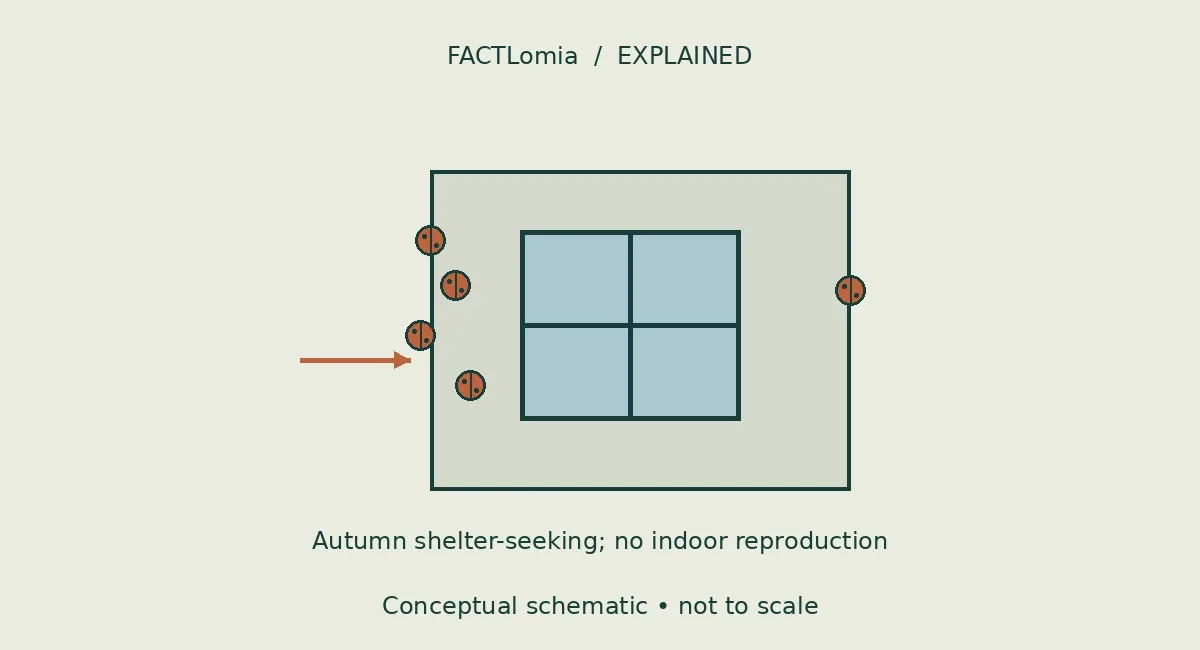
Large groups of ladybugs entering US homes in the fall are often multicolored Asian lady beetles looking for sheltered places to overwinter. They gather on buildings and enter small openings. Finding them indoors does not usually mean they are breeding in the house.
A building can resemble a winter refuge
Shortening days and cooling weather trigger adult beetles to seek protected sites. Sunny exterior walls can attract conspicuous clusters before the insects find cracks around windows, doors, siding, and roof lines. Attics and wall spaces can provide the sheltered conditions they seek. This seasonal behavior explains a sudden influx better than the assumption that the house has become their food source. [1]
Why they reappear on a warm winter day
Beetles that entered earlier can become active when their hiding place warms. They may move toward windows and other bright areas, making it seem as though a new population has suddenly emerged indoors. Extension guidance states that multicolored Asian lady beetles do not reproduce indoors; winter and spring visitors can be the same adults that arrived in autumn. [2]
The name can create unnecessary confusion
Ladybug, lady beetle, and ladybird are common names for members of the same beetle family. The multicolored Asian lady beetle is not excluded from that group simply because it becomes a nuisance in buildings. Species identification matters: color and spot number alone vary, so do not assume every orange visitor represents a different biological category. [1]
Are they eating the house?
These overwintering beetles do not feed on wood, clothing, or stored human food indoors. Their presence is different from a wood-damaging infestation. [1]
Why do they appear near windows?
Active beetles are attracted toward light and warmth and may become stranded there while trying to move outside. [2]
What is the simplest prevention?
Seal entry gaps before the fall aggregation period and repair screens. That addresses access rather than assuming the beetles are multiplying inside. [2]
Keep exploring
Continue with Why Do Periodical Cicadas Emerge All at Once? and Why Do Moths Gather Around Artificial Lights?.
Sources and evidence
- Virginia Tech Extension — Ladybird beetles in buildings ↗
Seasonal aggregation, names and indoor behavior.
- University of Minnesota Extension — Multicolored Asian lady beetles ↗
Entry routes, winter activity and lack of indoor reproduction.
Sources consulted: 15 October 2026. Written with AI assistance and checked against the linked references; not independently reviewed by a subject specialist. Sources do not endorse this article. See our editorial policy.
Revision: Initial publication; factual claims checked against linked sources.