
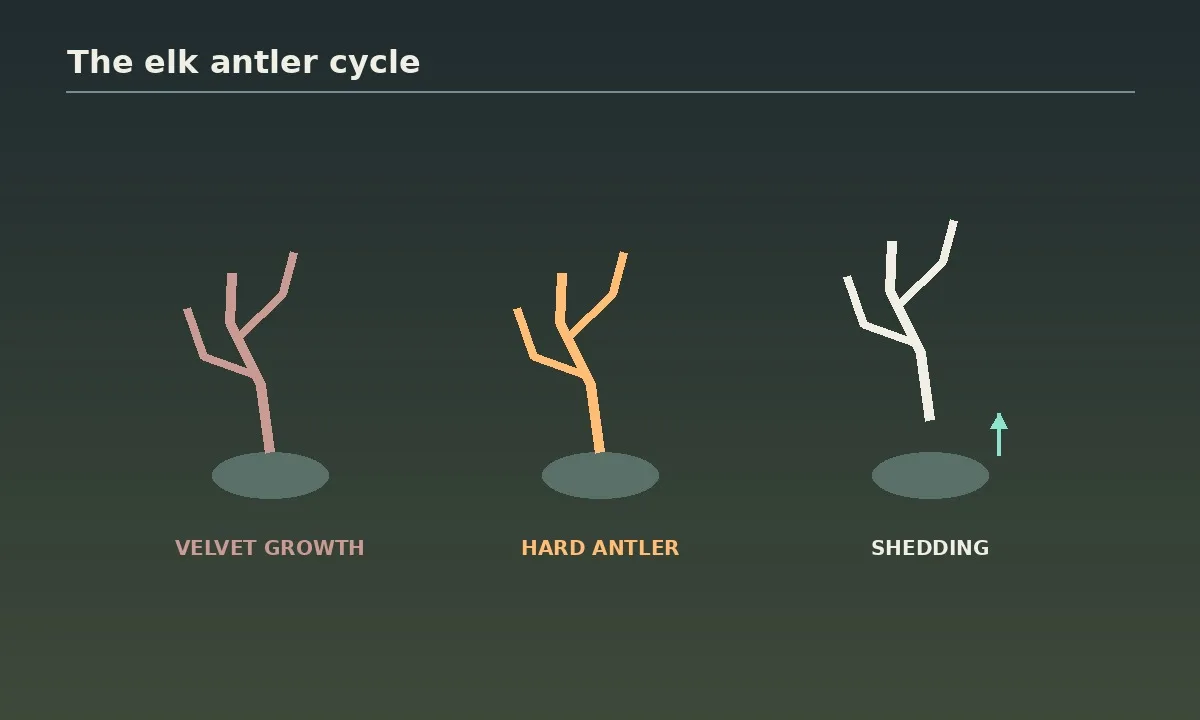
Bull elk shed their antlers when seasonal hormone levels fall after the breeding season. The connection between each antler and the skull weakens. A new antler grows from the same base during the next cycle.
Velvet feeds a growing antler
A growing antler is covered with a soft layer called velvet. Its blood vessels supply the developing tissue. As the antler hardens and the growing season ends, blood supply to the velvet dwindles and the bull rubs away the covering. [1]
When antlers become useful in the rut
During fall breeding season, mature bulls use hard antlers in displays and may lock antlers with rivals. The branches are grown anew each year, and the size of the next set depends on factors that include age, nutrition and overall condition. [1]
How the old set drops away
After the rut, declining hormone levels allow bone to break down at the base where the antler attaches to the skull. The antler separates, leaving the base from which new growth will start. A bull can briefly have one antler if the two sides detach at different times. [1]
Frequently asked questions
Do antlers and horns have the same structure?
Antlers are bone and are generally replaced each year. A bighorn sheep’s horn has a keratin sheath over a bony core and generally persists.
Do all elk shed on the same day?
No. Timing varies with the individual and its condition, and the two antlers can fall separately.
Sources and evidence
- National Park Service horns and antlers guide ↗
Antler tissue, velvet, growth and annual shedding.
Sources consulted: 12 November 2026. Written with AI assistance and checked against the linked references; not independently reviewed by a subject specialist. Sources do not endorse this article. See our editorial policy.
Revision: Initial publication.