
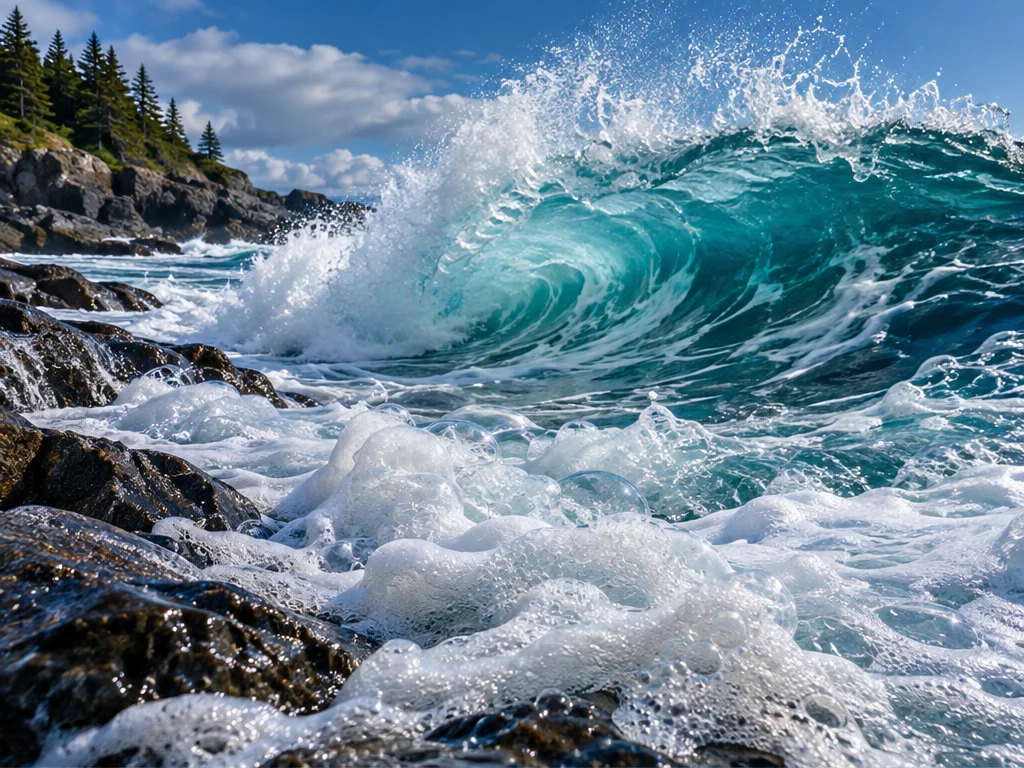
Sea foam forms when breaking waves and wind whip air into seawater. Organic molecules from sources such as decaying plankton can collect at the bubble surfaces and help the bubbles last. Enough persistent bubbles can accumulate into a layer of froth.
First, make a lot of bubbles
As a wave folds over, it traps pockets of air and pulls them below the surface. Turbulence breaks those pockets into many small bubbles. The bubbles rise, and waves behind the first one keep the supply coming. A windy shore with rough surf can produce much more foam than a calm bay. [1] [2]
Then give those bubbles time to accumulate
A foam bubble has a very thin liquid film separating its air from the surrounding air. That film drains and can eventually break. Some dissolved organic molecules act as surfactants and gather where air meets water. They help stabilize the films, so more bubbles survive long enough to form a patch of foam. [1]
Why one beach can be foamier than another
The amount of available organic matter varies from place to place and through the year. A bloom of algae offshore can release a large supply as it decays. If waves and winds then drive the froth toward the coast, it can build up in piles. Its appearance alone gives little information about what materials it contains. [2]
Read also how wind makes ocean waves.
Frequently asked questions
Why does the foam look white?
Light scatters in many directions as it crosses the surfaces of many tiny bubbles, creating the pale appearance.
Can sea foam form away from a beach?
Yes. Churning water can produce foam away from shore, too. Currents and winds can later carry it toward land.
Sources and evidence
- NOAA Office of Education — How Does Sea Foam Form? ↗
Wind and wave agitation, organic matter and surfactants.
- NOAA National Ocean Service — What Is Sea Foam? ↗
Coastal variations and the role of material released by decaying algal blooms.
Sources consulted: 28 November 2026. Written with AI assistance and checked against the linked references; not independently reviewed by a subject specialist. Sources do not endorse this article. See our editorial policy.
Revision: Initial publication.