
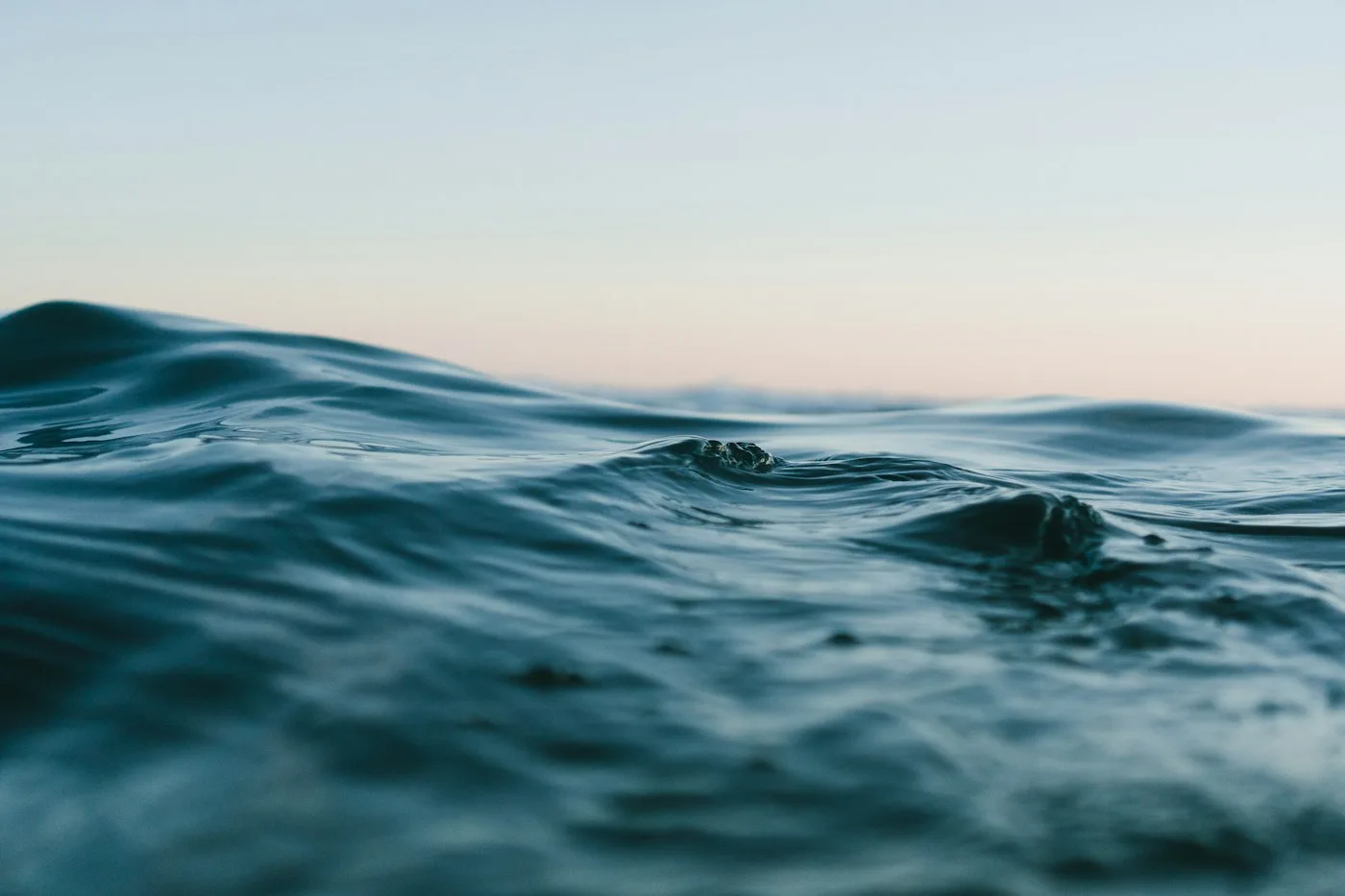
Ocean waves can keep moving after local wind stops because the wave carries energy forward while the water particles mostly move in small circular paths. Long swells can travel hundreds or thousands of kilometres from the storm that generated them.
Waves carry energy, not a wall of water
Wind transfers energy to the ocean surface. Water particles rise, fall and move in looping paths while the pattern of energy travels onward. In deep water, the individual particles do not travel with the crest from one beach to another.
A wave becomes larger when wind blows across a long stretch of water for a long time. This distance is called fetch, and it helps explain why distant storms can create powerful surf.
A storm leaves a swell behind
When a storm weakens or moves away, shorter choppy waves lose energy more quickly. Longer, organised swells separate and continue outward. Their crests become more spaced and smoother as they travel.
A beach may therefore receive clean lines of swell under a calm local sky. The weather overhead is not necessarily the weather that created the waves.
Shallow water changes the pattern
As waves approach shore, the sea floor slows the lower part of the wave. Energy is squeezed into a shorter distance, the crest steepens and the wave may break. Depth, shoreline shape and underwater obstacles determine the final form.
Surf is the last stage of a journey that may have begun far away in a different weather system.
Sources and evidence
- NOAA Ocean Service — Why does the ocean have waves? ↗
Wind generation, energy transport and wave behaviour.
- NOAA JetStream — Ocean waves ↗
Fetch, swell and shallow-water changes.
Sources consulted: 9 October 2026. Written with AI assistance and checked against the linked references; not independently reviewed by a subject specialist. Sources do not endorse this article. See our editorial policy.
Revision: Added original explanatory comparisons, source-linked evidence and a reader-focused example.