
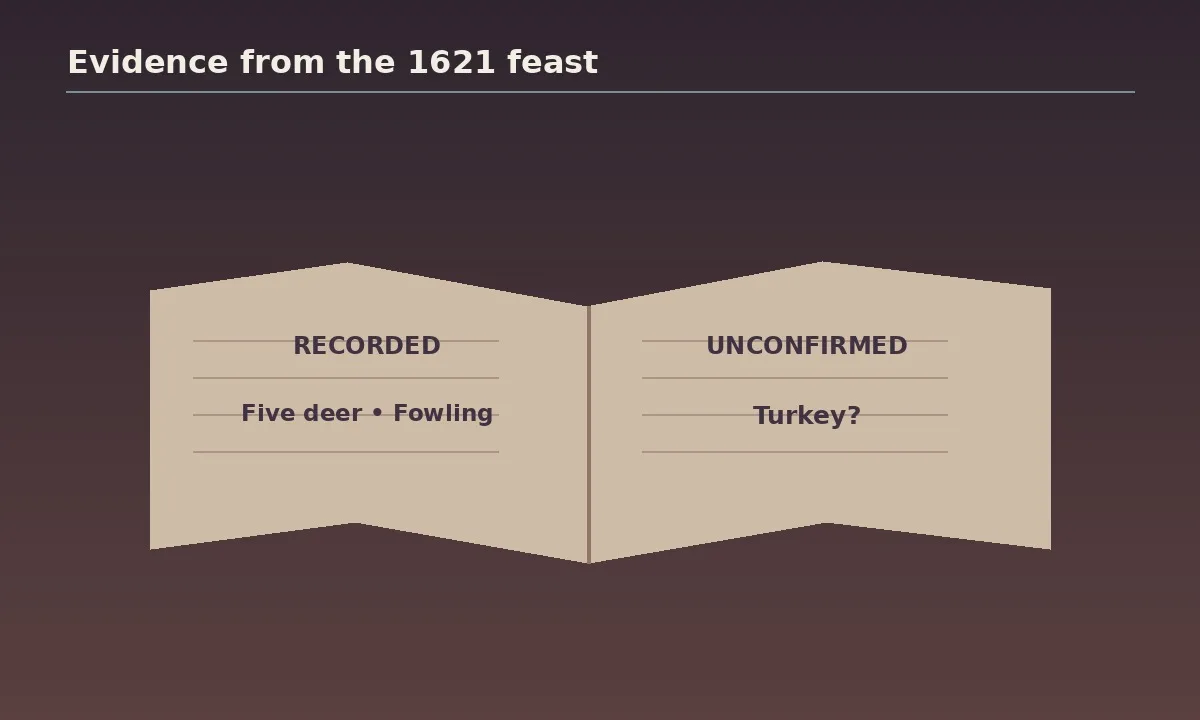
Edward Winslow’s account records that English colonists went fowling and that Wampanoag men brought five deer to the 1621 gathering. It does not give a complete menu or identify the birds by species.
What the letter actually records
Winslow describes the celebration after the Plymouth colonists gathered their harvest. He reports that a Wampanoag delegation led by Ousamequin, also known as Massasoit, joined the gathering for three days. The letter names the deer brought by the delegation and refers to colonists going out for birds. [1] [2]
Plausible food and documented food
Wild turkey lived in the area and may have been served. Other birds were available as well. A historian can consider foods common to the region and period, but the presence of an ingredient in seventeenth-century New England does not establish that it was served at this specific gathering. [1] [2]
Why the modern menu is a poor guide
The familiar holiday meal developed over time. Its dishes combine ingredients, techniques and traditions from many periods. Reading Winslow’s brief account on its own terms also puts the Wampanoag contribution at the center of the evidence, rather than treating it as a detail in a later holiday story. [1] [2]
Frequently asked questions
Is turkey named in the account of the feast?
Winslow mentions fowling without naming turkey. It is possible but unconfirmed.
Was the gathering on the fourth Thursday of November?
The precise calendar date is not established by the account. The modern holiday schedule is much later.
Sources and evidence
- Pilgrim Hall Museum ↗
Edward Winslow’s letter and its references to venison and fowling.
- Plimoth Patuxet Museums ↗
Wampanoag participation and the distinction between the harvest gathering and later Thanksgiving traditions.
Sources consulted: 12 November 2026. Written with AI assistance and checked against the linked references; not independently reviewed by a subject specialist. Sources do not endorse this article. See our editorial policy.
Revision: Initial publication.