
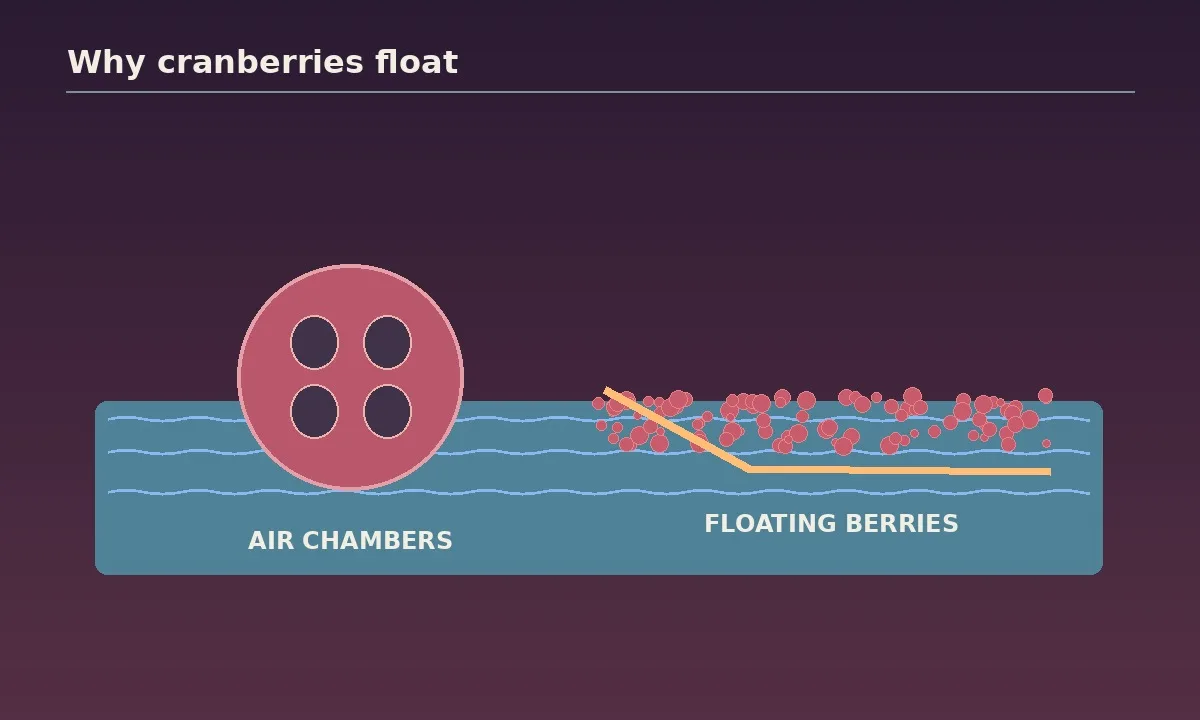
Growers flood cranberry beds at harvest so ripe berries can float after machines loosen them from their vines. Air pockets inside the fruit make the berries buoyant, so workers can gather them from the surface.
Water turns scattered fruit into a single layer
Cranberry vines form a low mat. In a wet harvest, workers flood the bed and use a machine to dislodge the berries. As berries rise, floating booms corral them into a smaller area. Workers pump or convey them out of the bed and send them for cleaning. [1] [2]
The berry has its own floats
Air-filled spaces lower the fruit’s average density. The skin and flesh may look solid from outside, but a cut berry shows pockets inside. That combination lets the whole fruit displace enough water to support its weight before it is fully submerged. [2]
Why some berries are picked dry
A dry harvest uses machinery to comb fruit from vines without first flooding the bed. Growers use the method for much of the fresh market, where appearance and storage life matter. Wet-harvested fruit commonly goes into products such as sauce or juice. [1] [2]
Frequently asked questions
Do cranberries grow underwater all summer?
The famous red water views show a temporary harvest flood. The vines normally grow on exposed beds.
Why is water useful after the berries come loose?
It carries loose berries together on the surface, so a boom can collect fruit from across a wide bed.
Sources and evidence
- University of Massachusetts cranberry production guide ↗
Wet harvest, floating booms and processing.
- Massachusetts Cranberries fall harvest ↗
Air pockets, detaching fruit and differences between harvesting methods.
Sources consulted: 12 November 2026. Written with AI assistance and checked against the linked references; not independently reviewed by a subject specialist. Sources do not endorse this article. See our editorial policy.
Revision: Initial publication.