
Wind chill is an estimate of how quickly exposed skin loses heat when wind and cold act together. It is not a second air temperature: a car or building does not cool below the actual air temperature because of wind, though it can cool to that temperature faster.
Wind increases heat loss from skin
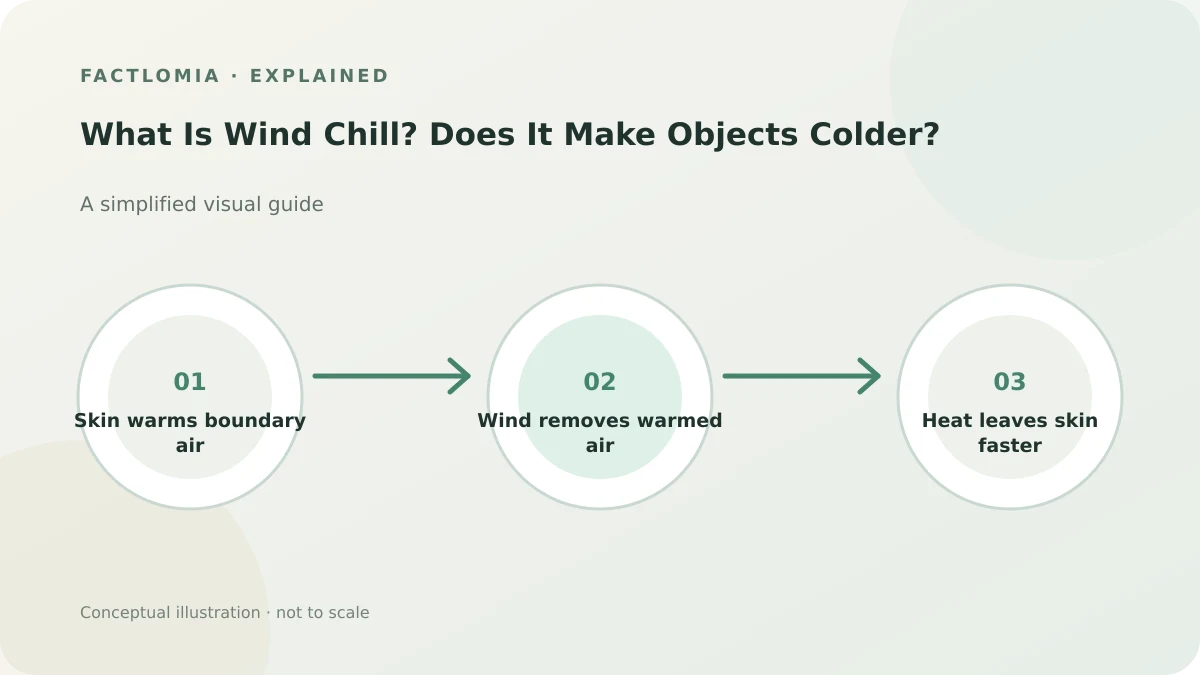
Your body warms a thin layer of air near the skin. Moving air removes that layer and carries heat away more quickly, so exposed skin can cool faster when it is windy. The National Weather Service’s wind-chill index combines air temperature and wind speed to express that increased rate of heat loss in a form people can compare. [1]
Wind chill is not the actual air temperature
A thermometer measures air temperature. Wind chill is an index focused on the effect of cold and wind on exposed skin. A parked car or building does not become colder than the surrounding air solely because wind is blowing, although airflow can bring it to the air temperature more quickly. This is why wind-chill values are not a forecast of how cold an object will measure. [2]
Why forecasts report it
The index helps describe how quickly cold conditions can affect people outdoors. Actual risk depends on exposure, clothing, wetness, activity and individual factors, so a single number cannot capture every situation. When a cold-weather alert is active, follow local National Weather Service guidance.
See why deserts cool rapidly at night for another way heat moves from Earth’s surface.
Frequently asked questions
Can wind chill freeze water faster?
Wind can increase heat transfer from an exposed object, but the object cannot cool below the actual air temperature due to wind alone.
Is wind chill the same as “feels like” temperature?
It is one type of apparent-temperature index. Other “feels like” values may account for heat and humidity.
Does the same wind chill affect everyone equally?
No. Exposure, clothing, health and activity change how quickly a person loses heat.
Sources and evidence
- National Weather Service — Understanding Wind Chill ↗
How wind and cold increase heat loss from exposed skin and the index’s purpose.
- National Weather Service — Winter Weather Warnings, Watches and Advisories ↗
Clarifies wind chill as a measure for people and that objects cool to actual air temperature.
Sources consulted: 1 November 2026. Written with AI assistance and checked against the linked references; not independently reviewed by a subject specialist. Sources do not endorse this article. See our editorial policy.
Revision: Initial publication. Claims and uncertainty checked against the cited references.