
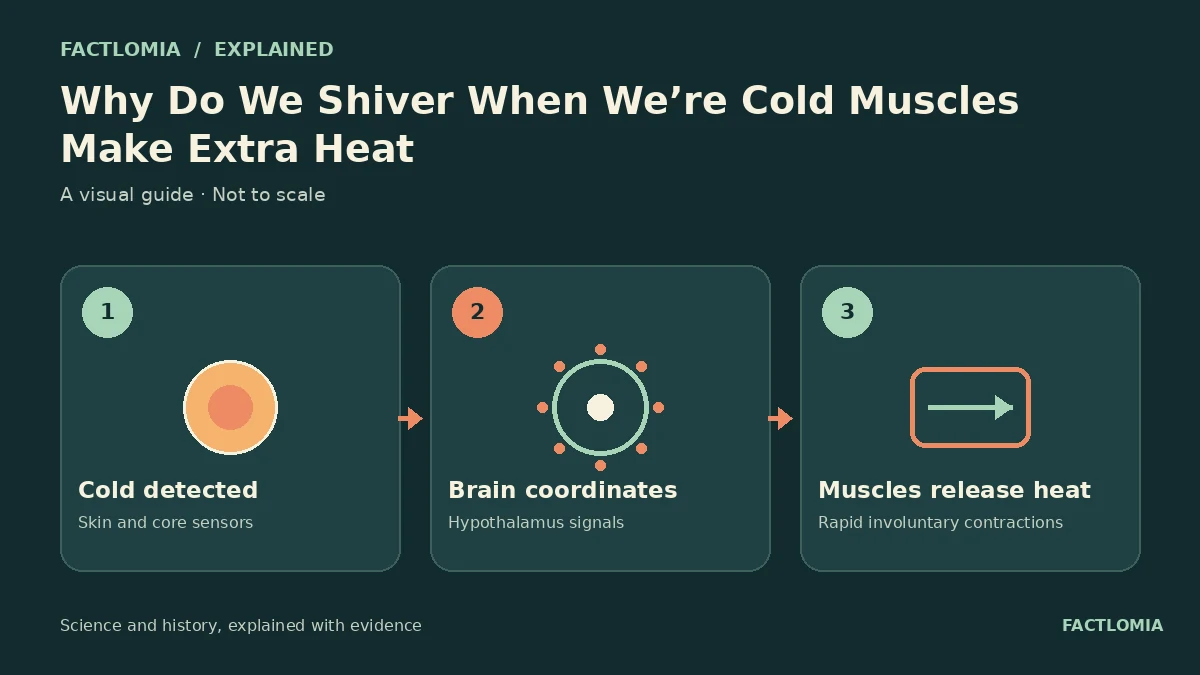
Shivering is the body’s rapid, involuntary muscle activity in response to cold. Repeated contractions use energy and release heat, helping defend the body’s core temperature. The brain coordinates this response with other cold defenses, including changes in skin blood flow and behavior such as seeking warmth.
The brain senses a temperature change
Temperature sensors in the skin and inside the body send signals to the brain. The hypothalamus helps coordinate responses that keep core temperature within a narrow range. When the body is losing heat, the nervous system can increase muscle activity and reduce blood flow near the skin, conserving warmth around vital organs. [1]
Muscle contractions release heat
During a shiver, skeletal muscles contract and relax in quick, involuntary bursts. Muscle cells use energy, and some of that energy is released as heat. Shivering is not a deliberate exercise routine; it is an automatic short-term response that can raise heat production while the body is exposed to cold. [2]
Shivering is only one cold response
The body can also narrow blood vessels near the skin to limit heat loss, and goosebumps can raise body hairs. These responses have different effects: shivering produces heat, while reduced skin blood flow slows heat transfer. Persistent or severe shivering can also happen with illness, so context matters; this explainer describes normal cold physiology, not diagnosis. [1]
Frequently asked questions
Does shivering warm the body?
It can increase heat production through muscle activity, although how much warmth it provides depends on conditions and duration.
Why can fever cause chills?
During some fevers, the brain temporarily raises its temperature target, so a person may feel cold and shiver while the body moves toward that target.
Can you control shivering?
Shivering is mainly involuntary, though moving to a warmer place and adding insulation can reduce the cold exposure that triggers it.
Sources and evidence
- MedlinePlus — Hypothermia ↗
Describes shivering and other body responses to cold exposure.
- Merck Manual — Hypothermia ↗
Explains heat production and thermoregulatory responses to cold.
- OpenStax Anatomy and Physiology — The Hypothalamus ↗
Background on hypothalamic regulation of body temperature.
Sources consulted: 4 November 2026. Written with AI assistance and checked against the linked references; not independently reviewed by a subject specialist. Sources do not endorse this article. See our editorial policy.
Revision: New explainer; separates heat generation by shivering from heat conservation by skin blood-flow changes.