
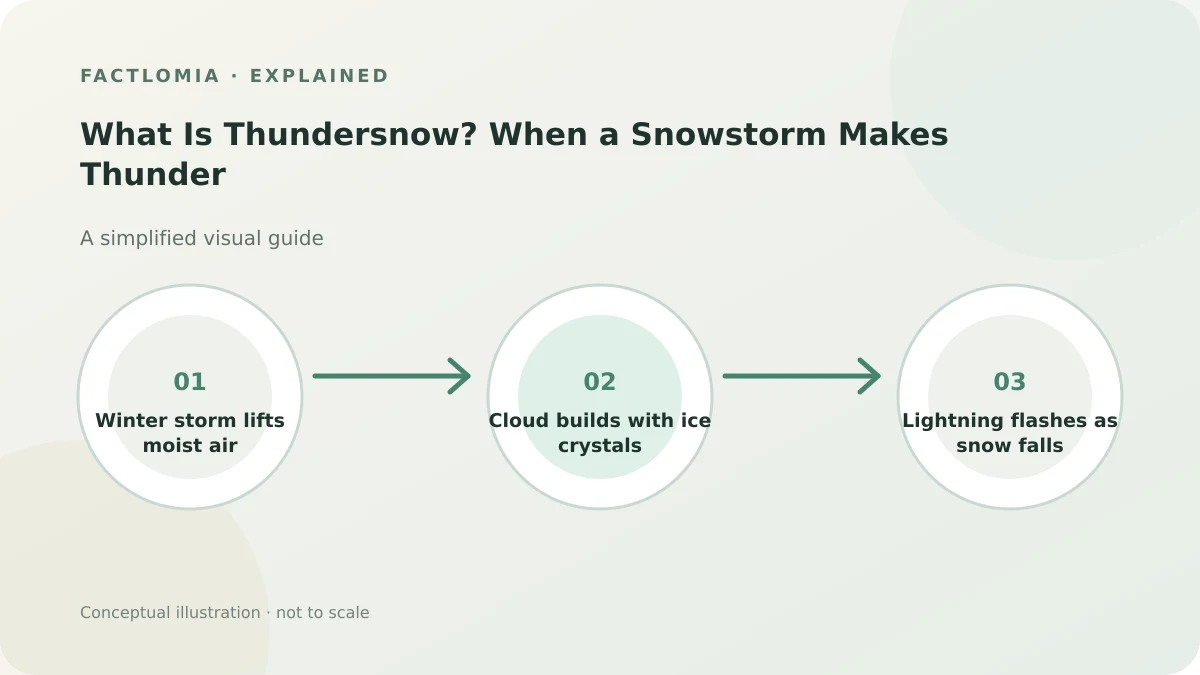
Thundersnow is a thunderstorm that produces snow instead of rain. It can form when an intense winter storm supplies moisture and unstable air that rises strongly enough to create lightning. Heavy snow can muffle thunder, so people may hear it only nearby.
A snowstorm can still contain rising, unstable air
Thunderstorms do not require warm summer weather; they require conditions that support rising air, cloud growth and electrical charge separation. In a winter storm, a strong lift mechanism—such as a front, a coastal storm or lake-effect instability—can help build vigorous clouds. If the storm’s temperature profile keeps precipitation frozen, those clouds may produce snow and lightning together. [1]
Why thundersnow is often linked to heavy snow
Thundersnow is uncommon because winter storms often lack the instability and strong updrafts needed for thunder. When it occurs, the same vigorous upward motion that supports lightning can help produce intense snowfall rates in a narrow area. That does not mean every heavy snowstorm has thundersnow. [2]
Snow can make thunder seem quieter
A deep snowpack and falling snow can absorb or scatter some sound, and winter storms may limit how far sound travels. Thunder is therefore often heard only relatively close to the lightning. The lightning itself is real; the winter setting changes the precipitation and the conditions for hearing it.
Compare the sound with why lightning is seen before thunder is heard.
Frequently asked questions
Can thundersnow happen during lake-effect snow?
Yes. Strong lake-effect bands can sometimes have enough instability and lift for lightning, though this is uncommon.
Is thundersnow dangerous?
The lightning is a hazard, and the storm may bring intense snowfall and poor visibility. Follow local weather alerts.
Why do I hear less thunder?
Thunder may be muffled by snow and storm conditions, and the lightning may be far away.
Sources and evidence
- National Weather Service — Severe Weather: Thunderstorms in Winter ↗
Thunder can occur in winter during intense snowstorms.
- National Weather Service — Types of Storms That Typically Produce Heavy Snow ↗
Winter storm structures and intense narrow snow bands that may support strong snowfall.
Sources consulted: 1 November 2026. Written with AI assistance and checked against the linked references; not independently reviewed by a subject specialist. Sources do not endorse this article. See our editorial policy.
Revision: Initial publication. Claims and uncertainty checked against the cited references.