
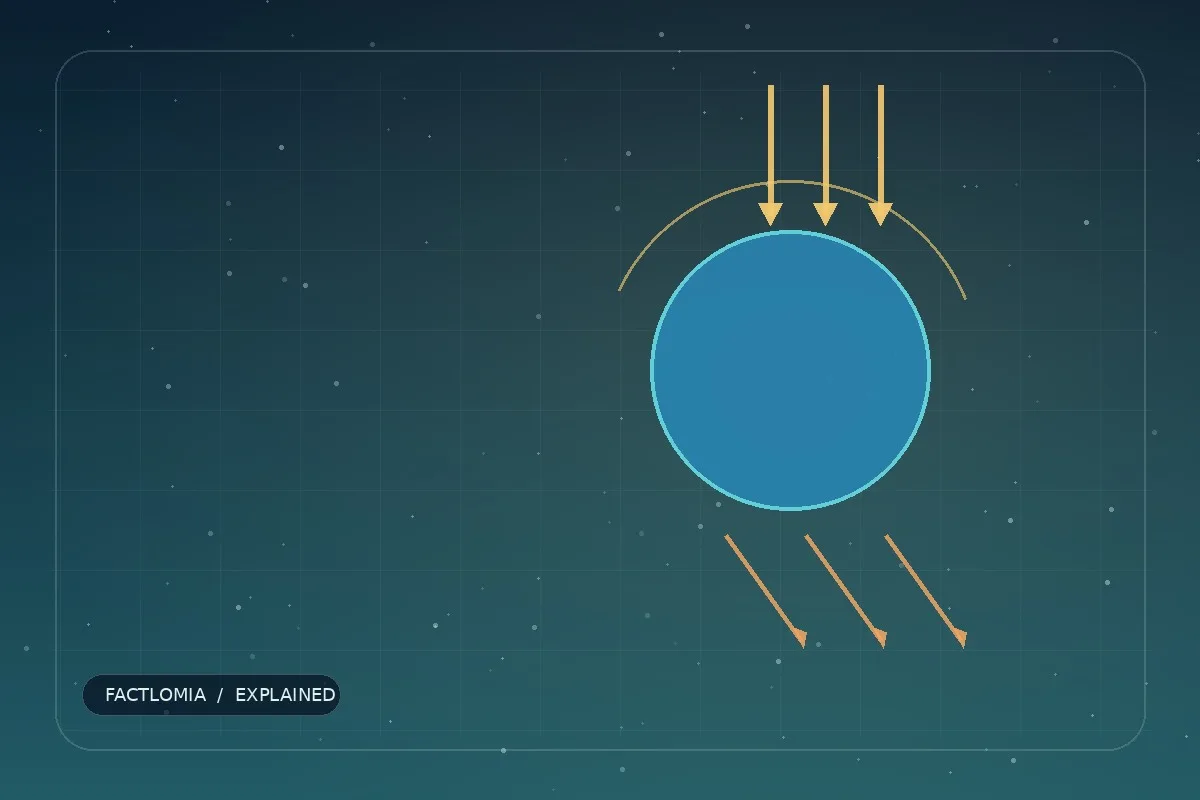
Earth has a positive energy imbalance when it absorbs more energy from the Sun than it releases back to space. A NASA and NOAA study found that two independent measurements indicated the imbalance roughly doubled between 2005 and 2019. Most of the extra energy goes into the ocean. The finding describes a past trend in the planet’s energy budget; it is not a claim that global temperature doubled or a prediction for one specific year.
A simple way to picture the planet’s energy budget
Sunlight enters Earth’s system, and Earth sends energy back to space as reflected sunlight and emitted heat. If the outgoing amount is smaller than the absorbed amount, energy accumulates and the planet warms. The imbalance is small compared with the total energy flowing through the system, but it persists across a vast planet and can alter ocean heat, ice and atmosphere. [1]
How researchers compared two measurements
The research compared satellite observations from NASA’s CERES instruments with estimates of ocean heat uptake from measurements including the Argo float network. Around 90 percent of the excess heat is stored in the ocean, so the two independent approaches can be checked against each other. The study reported that the imbalance approximately doubled over 2005–2019. [1, 2]
What “doubled” does not mean
It does not mean the Earth became twice as hot, nor does it mean every year followed a smooth straight line. The result is a comparison across a 14-year period and depends on how the data are adjusted and combined. Internal climate variability also affects short-term measurements. The broad implication is that the Earth system was taking up heat faster by the end of the studied interval. [2]
FAQ: Earth’s energy imbalance
Where does most excess heat go? Into the ocean, according to the study’s framing of the energy budget.
Does a positive imbalance mean every place warms each year? No. Regional and year-to-year conditions vary.
Is “doubled” a new measurement through 2026? No. The cited comparison covers 2005–2019.
Sources and evidence
- NASA — Joint NASA, NOAA Study Finds Earth’s Energy Imbalance Has Doubled ↗
Study summary, comparison period and independent measurement approaches.
- Geophysical Research Letters — Earth’s Energy Imbalance From the Ocean Perspective (2005–2019) ↗
Peer-reviewed research on ocean heat uptake and Earth energy imbalance.
Sources consulted: 19 November 2026. Written with AI assistance and checked against the linked references; not independently reviewed by a subject specialist. Sources do not endorse this article. See our editorial policy.
Revision: Initial publication. Claims and stated limits checked against the linked official and research sources.