
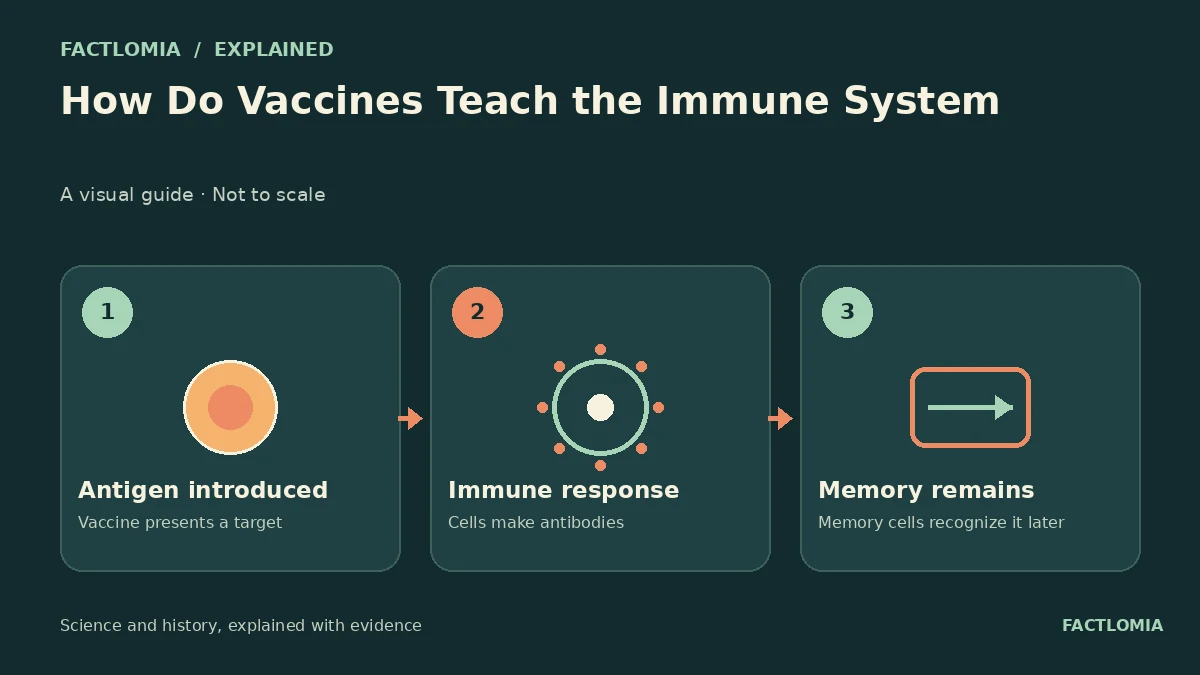
Vaccines help the immune system recognize a pathogen by exposing it to an antigen or, for some vaccine types, instructions that let cells make an antigen temporarily. The immune response can produce antibodies and memory B or T cells, so the body may respond faster if it encounters the pathogen later. Vaccine types and the duration of protection vary.
An antigen gives the immune system something to recognize
An antigen is a substance that can prompt an immune response. Depending on the vaccine, it may be a weakened or inactive pathogen, a piece of one, or instructions that let cells make a harmless target protein for a short time. The immune system responds to that target without needing the full disease-causing infection. [1]
Immune cells build a memory
B cells can make antibodies that bind to a target, while other immune cells help coordinate or destroy infected cells. Some activated B and T cells become memory cells. If the immune system later encounters the same pathogen, those memory cells can help it respond more quickly. The size and duration of the response depend on the vaccine, the pathogen, and the person. [2]
Protection is not identical for every vaccine
Some vaccines need multiple doses or later boosters; others can provide long-lasting protection. Vaccination does not always prevent every infection, but it can train immune defenses to reduce the chance of severe disease for the illnesses a vaccine targets. This is a general biology explanation, not personal medical advice; current recommendations depend on the vaccine and individual circumstances. [1]
Frequently asked questions
Do vaccines give you the disease?
Most vaccines do not cause the disease they are designed to prevent. Vaccine types differ, and some can cause short-lived side effects as the immune system responds.
What are memory cells?
They are long-lived immune cells that can recognize a target encountered before and help the body respond more quickly.
Does every vaccine last for life?
No. Protection duration varies by vaccine and disease, and some vaccines need additional doses or boosters.
Sources and evidence
- CDC — Explaining How Vaccines Work ↗
Explains antigens, immune responses, and memory cells.
- CDC — Principles of Vaccination ↗
Professional overview of immune memory and vaccine-induced protection.
- CDC — Types of Immunity ↗
Defines active and vaccine-induced immunity.
Sources consulted: 4 November 2026. Written with AI assistance and checked against the linked references; not independently reviewed by a subject specialist. Sources do not endorse this article. See our editorial policy.
Revision: New general explainer; avoids promising complete or lifelong protection for every vaccine.