
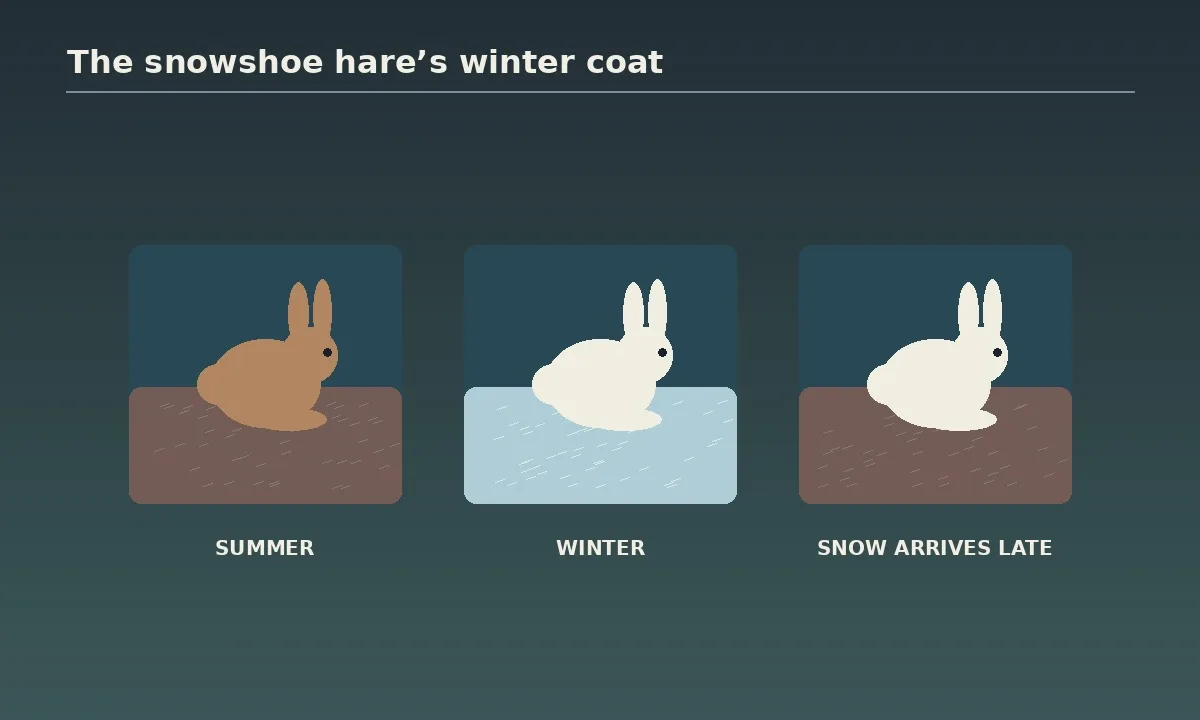
Snowshoe hares grow a white winter coat during an autumn molt. Changing day length helps set the schedule, so the coat can turn white even when the ground remains bare.
The hare replaces its coat
A brown hair does not gradually bleach each time it snows. As the hare molts, new winter hairs replace much of its brown summer coat. During the change, a hare can look patchy, with white areas growing alongside brown ones. [1] [2]
Why snow can arrive out of step
The yearly pattern of daylight is predictable. Snowfall varies from one year to the next. A hare whose coat changes on its usual schedule can therefore spend time white against a dark forest floor or brown against early snow. Researchers call this camouflage mismatch. [1]
Why mismatch matters
A pale coat helps conceal a hare when the background is snow. Against leaf litter or dark soil, the same coat can make the animal easier for a predator to spot. Studying when coats change and how long snow lasts lets researchers ask whether hare populations can keep pace with changes in snow cover. [1]
Frequently asked questions
Can all snowshoe hares turn white?
Some populations in milder regions include hares that remain brown in winter. Coat patterns vary geographically.
Do they turn brown again in spring?
Yes. A spring molt restores the summer coat in hares that changed to white for winter.
Sources and evidence
- U.S. Geological Survey climate adaptation research ↗
Day-length cue, seasonal molt and snow mismatch research.
- National Park Service ↗
Seasonal coat colors and habitat.
Sources consulted: 12 November 2026. Written with AI assistance and checked against the linked references; not independently reviewed by a subject specialist. Sources do not endorse this article. See our editorial policy.
Revision: Initial publication.