
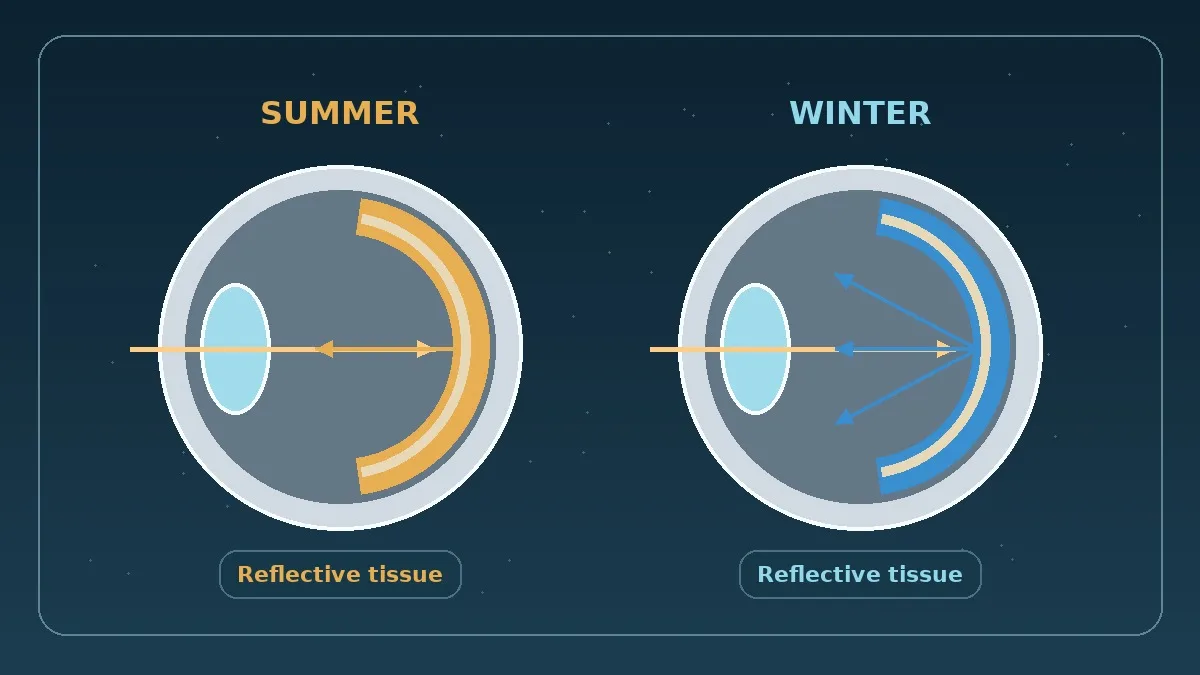
The reflective tissue behind a reindeer’s retina, called the tapetum lucidum, changes from a golden appearance in summer to deep blue in winter. This seasonal shift changes how light travels within the eye and may help the animal detect scarce light during the long Arctic winter.
A mirror behind the retina
Many mammals have a tapetum lucidum. It sends some light that has passed through the retina back toward its light-sensitive cells, giving those cells another chance to detect it. This is also why an animal’s eyes can appear to shine when illuminated in the dark. [1]
Summer gold and winter blue
Researchers compared the eyes of Arctic reindeer near the summer and winter solstices. In summer, the reflective layer returned more light directly. In winter, the darker blue layer scattered more light within the retina, and less was returned out of the eye. This offers an adaptation to dramatically different seasonal light conditions. [1] [2]
What changes is inside the eye
The color shift concerns reflective tissue behind the retina. The everyday visible color of an eye usually refers to the iris at the front. The distinction matters because the reflecting structure changes the way vision works in low light. [1]
Frequently asked questions
Do all deer show this seasonal change?
The cited study describes the unusual seasonal change in Arctic reindeer.
Why would winter vision matter?
At high latitudes, daylight can be very limited for weeks or months.
Sources and evidence
- University College London — Shifting Mirrors: Retinal Reflections in Arctic Reindeer ↗
Original study comparing reflective tissue in the two seasons.
- Nature — Seasonal Shift for Reindeer Eyes ↗
Summarizes the gold-to-blue shift and its relationship to low-light vision.
Sources consulted: 24 November 2026. Written with AI assistance and checked against the linked references; not independently reviewed by a subject specialist. Sources do not endorse this article. See our editorial policy.
Revision: Initial publication. Factual claims checked against the cited sources.