
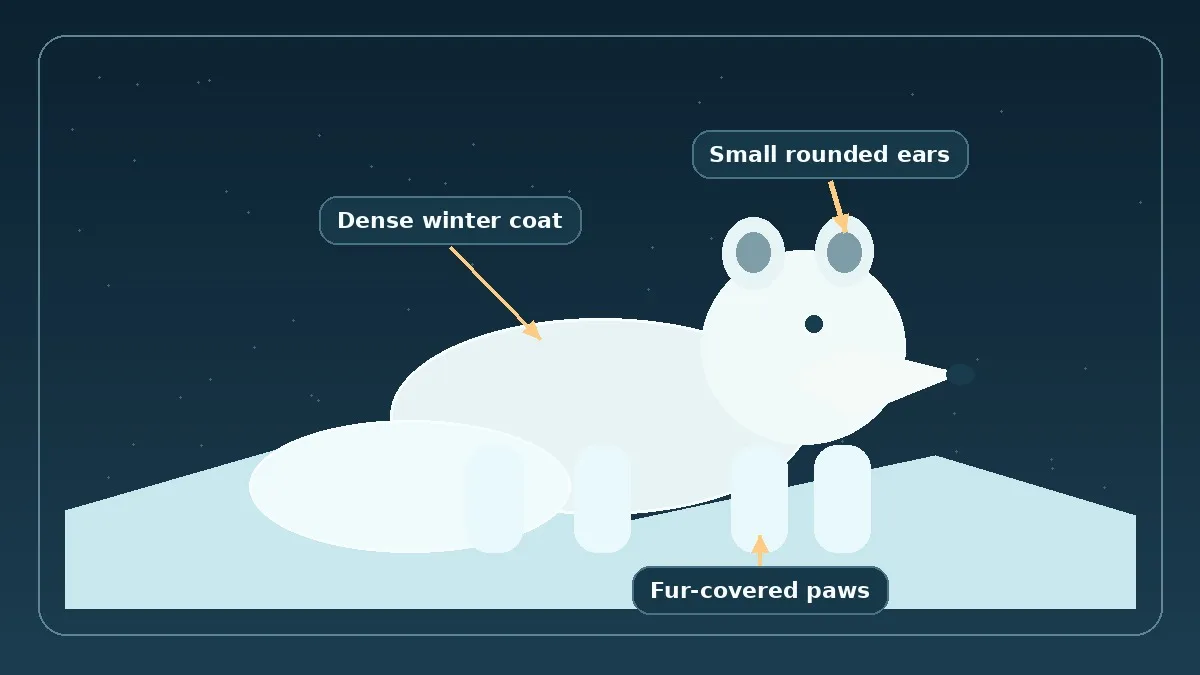
Arctic foxes survive freezing conditions with dense winter coats, small ears, compact bodies and fur-covered feet. These traits help limit heat loss. They remain active and look for food in winter, including carrion and scraps from other predators, while their seasonal coat also helps them blend into their surroundings.
A coat that changes with the seasons
Arctic foxes shed and replace their fur in seasonal molts. In the white color phase, their brownish summer fur gives way to a longer, thicker, pale winter coat. Other individuals have a darker, blue-gray color phase. Both forms occur within the species. [1] [2]
Why their shape matters
Compared with the red fox, the Arctic fox has shorter ears and legs and a more compact shape. A compact body exposes less surface area relative to its volume, helping slow heat transfer. Dense fur also covers its paws during winter. That distinctive feature inspired the species name lagopus, meaning hare-footed. [1]
Finding food on a frozen landscape
The arctic fox adjusts its diet to what is available. In Alaska, coastal areas can offer scavenged food during winter, while tundra habitats support hunting for rodents and other small animals in warmer months. Foxes also eat birds, eggs, insects and other available foods. [2]
Frequently asked questions
Do Arctic foxes hibernate?
They remain active during the winter.
Are Arctic foxes always white in winter?
No. Some belong to a darker color phase, and coat patterns vary among populations.
Sources and evidence
- Alaska Department of Fish and Game — Arctic Fox Species Profile ↗
Body shape, dense fur, furry feet and seasonal coat changes.
- National Park Service — Arctic Fox ↗
Color forms, habitat, seasonal food and diet.
Sources consulted: 24 November 2026. Written with AI assistance and checked against the linked references; not independently reviewed by a subject specialist. Sources do not endorse this article. See our editorial policy.
Revision: Initial publication. Factual claims checked against the cited sources.