
 Space
Is a Day on Venus Longer Than a Year?
Venus rotates in about 243 Earth days and orbits in 225, but its solar day is about 117. Understand the difference with a simple calculation.
Explore unusual worlds, hidden oceans and the clues astronomers use to understand them. Read in order or choose the question that catches your attention. Each story includes its sources.
SpaceVenus rotates in about 243 Earth days and orbits in 225, but its solar day is about 117. Understand the difference with a simple calculation.
 Space
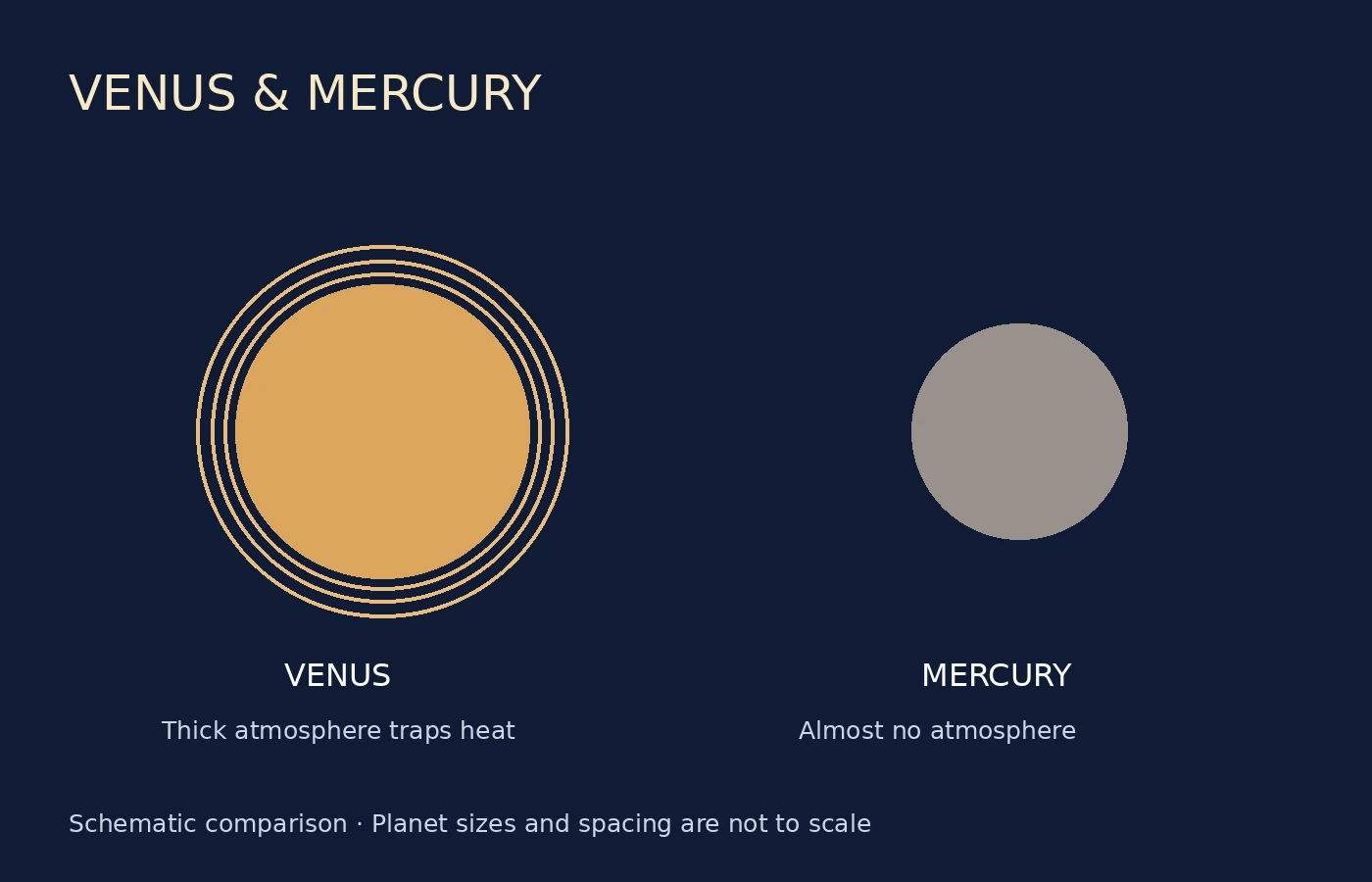
Venus is hotter than Mercury because its dense carbon-dioxide atmosphere traps heat in a powerful greenhouse effect. Mercury is closer to the Sun, but its thin exosphere cannot retain heat well, especially through its long nights.
 Space
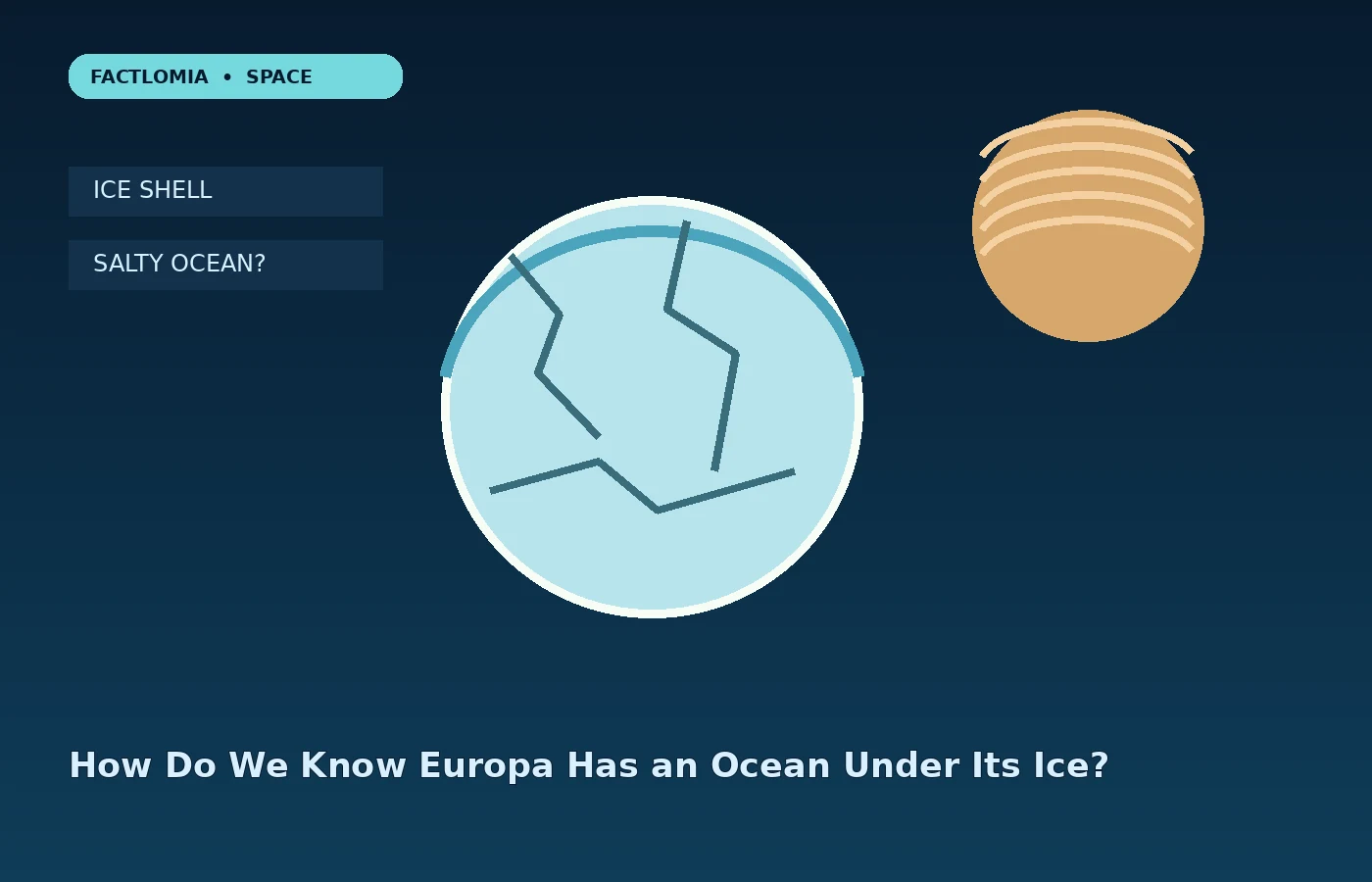
Europa’s ocean is hidden beneath ice, but its cracked surface, magnetic response and tidal heating offer several independent clues. Here is what the evidence shows—and what remains unconfirmed.
 Space
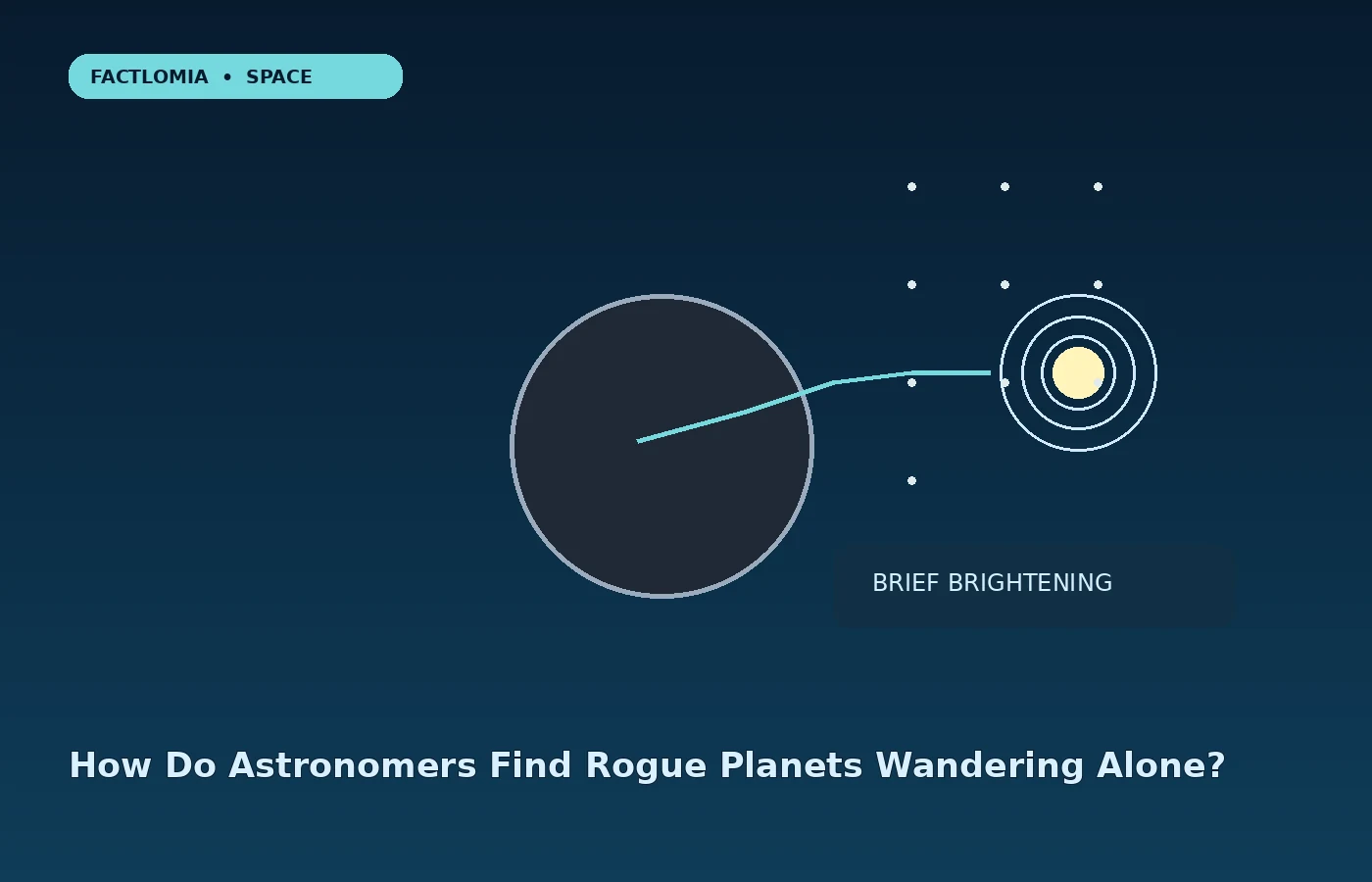
Rogue planets can be almost invisible because they do not orbit a bright star. Astronomers can find some when their gravity briefly magnifies light from a more distant star.
 Space
The Moon’s far side has more rugged highlands and fewer dark lava plains than the near side. A thicker crust helps explain the contrast, though scientists still study its origin.
Take a five-story journey through a topic.
Follow the water from its blue surface to the ecosystems of the deep sea.
Start exploring ↗5 QUESTIONS · GUIDED READINGExplore unusual worlds, hidden oceans and the clues astronomers use to understand them.
Start exploring ↗5 QUESTIONS · GUIDED READINGDiscover the surprising physics and chemistry behind familiar things.
Start exploring ↗