
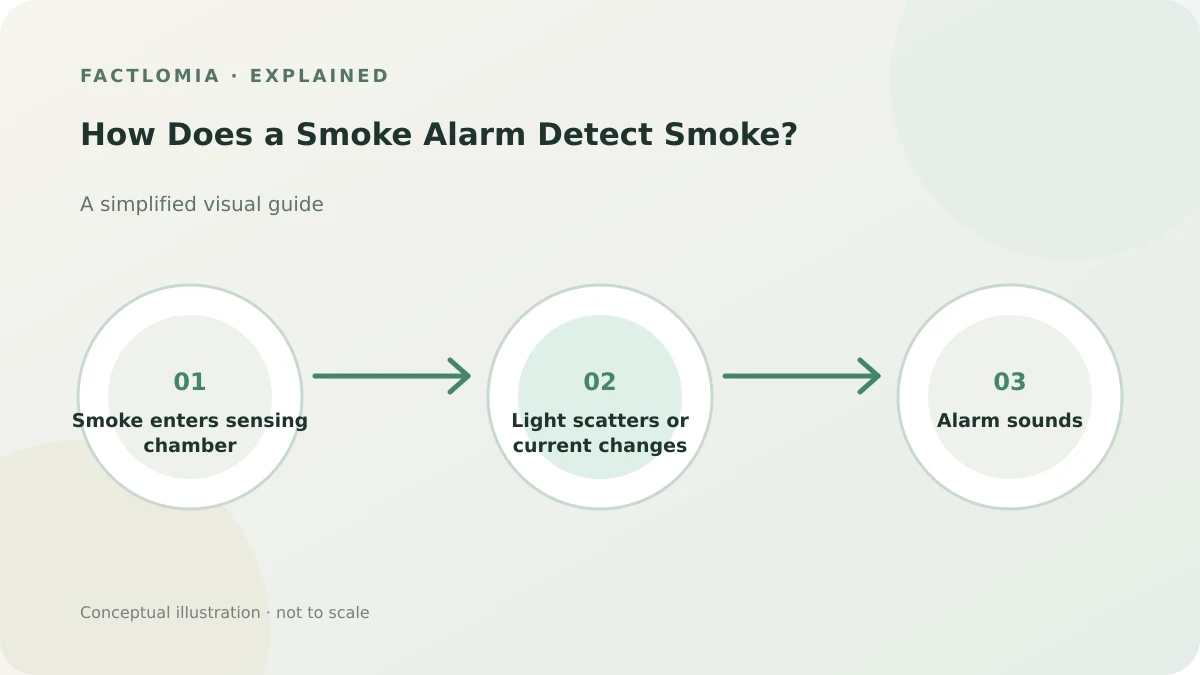
A smoke alarm detects particles from smoke using a sensing chamber. In a photoelectric alarm, smoke scatters light toward a sensor. In an ionization alarm, smoke disrupts a small electrical current in a chamber. The device then triggers an audible warning; the two approaches can respond differently to fire conditions.
Photoelectric alarms look for scattered light
A photoelectric smoke alarm contains a light source and a sensor arranged so the beam does not normally shine directly onto the sensor. When smoke enters the chamber, particles scatter light; some of it reaches the sensor and can trigger the alarm. The device senses smoke particles, not a flame or a fire’s color. [1]
Ionization alarms detect a change in current
An ionization alarm uses a small electrical current in a sensing chamber. Smoke entering the chamber changes that current, and the alarm’s electronics respond. The U.S. Fire Administration notes that photoelectric and ionization alarms can detect different types of fires and that dual-sensor options combine technologies. [1]
A detector needs working power and maintenance
Sensing technology cannot help if an alarm is disconnected, out of power or placed where it cannot detect smoke promptly. Follow the manufacturer’s instructions and local fire-safety guidance for installation, testing and replacement. This article explains the sensing principle; it is not a substitute for the device’s manual or fire-code requirements.
For another everyday technology explainer, read how a touchscreen detects a finger.
Frequently asked questions
Does a smoke alarm detect heat?
A smoke alarm detects smoke particles; a heat alarm is a separate device designed to respond to temperature conditions.
Which is better, photoelectric or ionization?
They use different sensing methods and can respond differently. The U.S. Fire Administration recommends following current safety guidance and using alarms listed by a recognized testing laboratory.
Why can cooking trigger an alarm?
Smoke or aerosol particles from cooking can enter the sensing chamber and resemble particles the alarm is designed to detect.
Sources and evidence
- U.S. Fire Administration — Smoke Alarms ↗
Differences between ionization and photoelectric smoke alarms and fire-safety recommendations.
- U.S. Fire Administration — Position Statements ↗
Research context on smoke alarm technologies and their performance across fire scenarios.
Sources consulted: 1 November 2026. Written with AI assistance and checked against the linked references; not independently reviewed by a subject specialist. Sources do not endorse this article. See our editorial policy.
Revision: Initial publication. Claims and uncertainty checked against the cited references.