
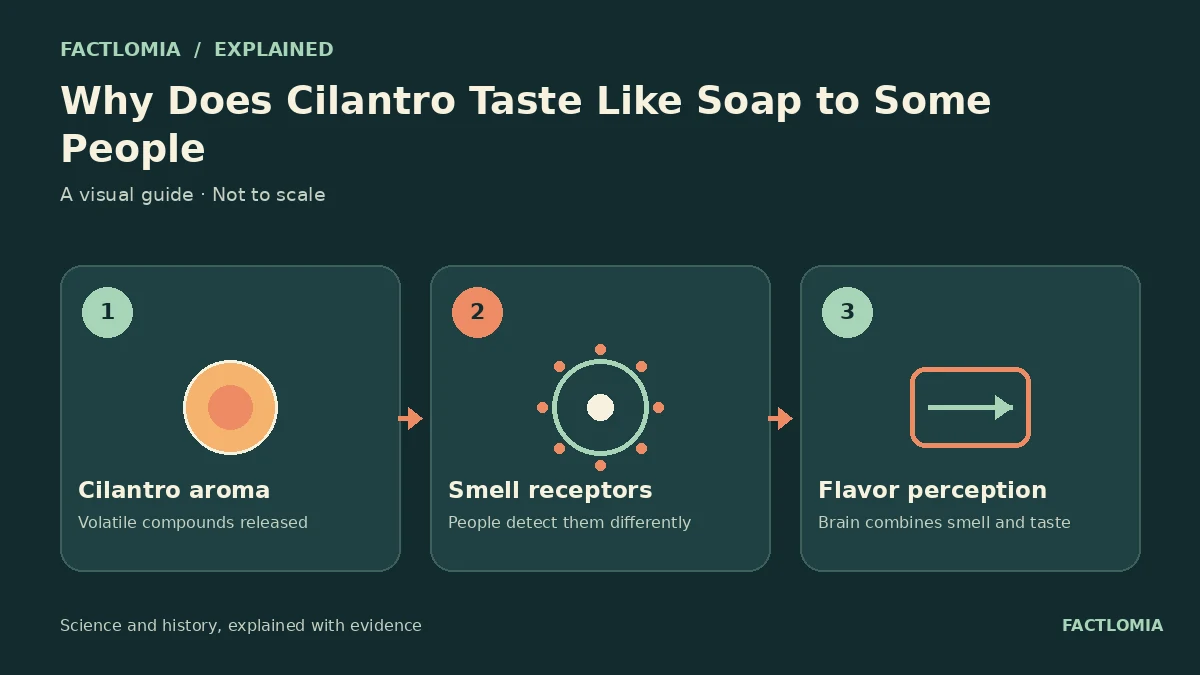
Cilantro can taste soapy to some people because taste depends partly on smell, and people differ in how they detect its aromatic compounds. Genetic variation in several chemosensory pathways has been associated with cilantro perception, but there is no single “cilantro gene” that fully determines whether someone likes it.
Flavor is more than taste buds
When you eat cilantro, volatile molecules travel from the mouth toward smell receptors in the nose. The brain combines that information with basic tastes such as bitter, sour, salty, sweet, and savory. If a person is especially sensitive to particular cilantro aromas, the herb may register as soapy or sharp rather than fresh and citrusy. [1]
Genes can shape the signal
Twin and genetic studies have linked differences in cilantro ratings with variants in several genes involved in smell and taste pathways. One often-discussed olfactory-receptor gene, OR6A2, sits near a group of receptors that detect aldehydes—compounds also present in cilantro. Research supports a genetic contribution, not a simple one-gene switch: learning, culture, exposure, and the rest of a person’s sensory system also matter. [1][2]
Can your perception change?
People’s food preferences can shift with repeated exposure and preparation. Crushing, cooking, or combining cilantro with other ingredients changes which aromas reach the nose. Someone who dislikes fresh leaves may still enjoy a dish where the herb’s flavor is balanced with acid, heat, or other herbs. The difference is a normal variation in perception, not evidence that the cilantro is spoiled. [3]
Frequently asked questions
Is there one gene that makes cilantro taste like soap?
No. Studies find genetic associations, but the trait is influenced by several sensory factors and does not come down to one confirmed switch.
Does cilantro taste different from coriander?
In U.S. English, cilantro usually means the leaves and coriander often means the dried seeds of the same plant; their flavors differ.
Can cooking make cilantro less soapy?
Heat and other ingredients change the herb’s aroma, so cooked or blended cilantro may taste different from fresh leaves.
Sources and evidence
- Eriksson et al., Flavour Journal — Genetic analysis of chemosensory traits ↗
Twin and genetic study reporting associations between cilantro ratings and several sensory-pathway variants.
- National Institute on Deafness and Other Communication Disorders — Taste Disorders ↗
Background on how smell and taste work together in flavor perception.
- McGee, Nature — The Chemistry of Cilantro ↗
Explains cilantro aroma compounds and their sensory character.
Sources consulted: 4 November 2026. Written with AI assistance and checked against the linked references; not independently reviewed by a subject specialist. Sources do not endorse this article. See our editorial policy.
Revision: New explainer; avoids presenting OR6A2 as a single-gene explanation.