
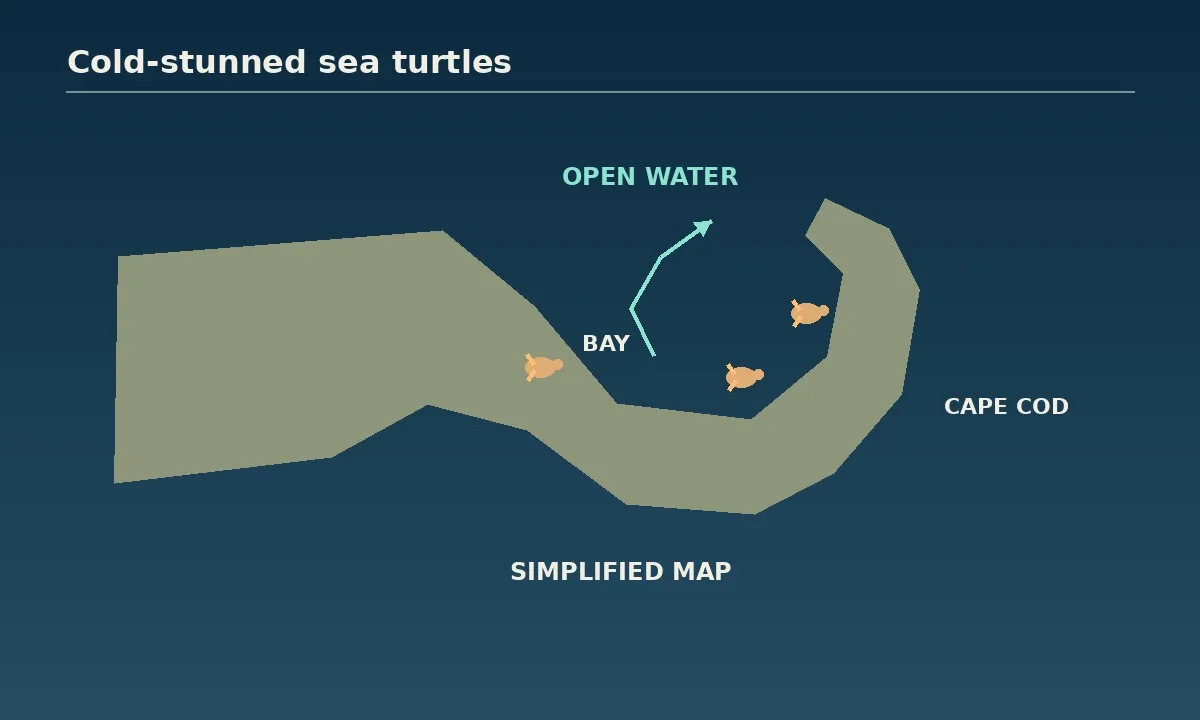
Cold-stunning occurs when water gets cold enough to leave some sea turtles weak and unable to swim normally. In Cape Cod Bay, the shape of the cape can complicate the escape route to warmer water as fall temperatures drop.
A turtle loses mobility as the water cools
Most sea turtles depend heavily on environmental heat. In cold water their muscles and other bodily functions slow. A cold-stunned turtle may float, struggle to swim or wash ashore. A turtle can look lifeless and still be alive. [1]
Why the shape of the bay matters
Sea turtles forage in Massachusetts waters in warmer months. As temperatures drop, a turtle inside the bay must find a way out around the cape rather than swim south directly into warmer waters. Currents and wind can carry weakened animals toward particular beaches. NOAA describes a local stranding season spanning late October through early January. [2]
Which turtles are most affected?
Cape Cod responders often encounter juvenile Kemp’s ridleys, and can also find loggerheads and green turtles. The mix and number vary with the year. A beach encounter is best reported to the local stranding network so trained responders can assess the animal. [1] [2]
Frequently asked questions
Does a stranded turtle need to be returned to the water?
NOAA advises against putting a cold-stunned turtle back into the water. Contact the local stranding network and follow its directions.
Does every sea turtle react the same way to cold?
No. Species differ in how well they retain heat, and individual size and conditions also matter.
Sources and evidence
- NOAA Fisheries cold-stunning FAQ ↗
Physiology, symptoms and official stranding guidance.
- NOAA Fisheries Cape Cod cold-stunning feature ↗
Cape Cod Bay’s geography, local season and species affected.
Sources consulted: 12 November 2026. Written with AI assistance and checked against the linked references; not independently reviewed by a subject specialist. Sources do not endorse this article. See our editorial policy.
Revision: Initial publication.