
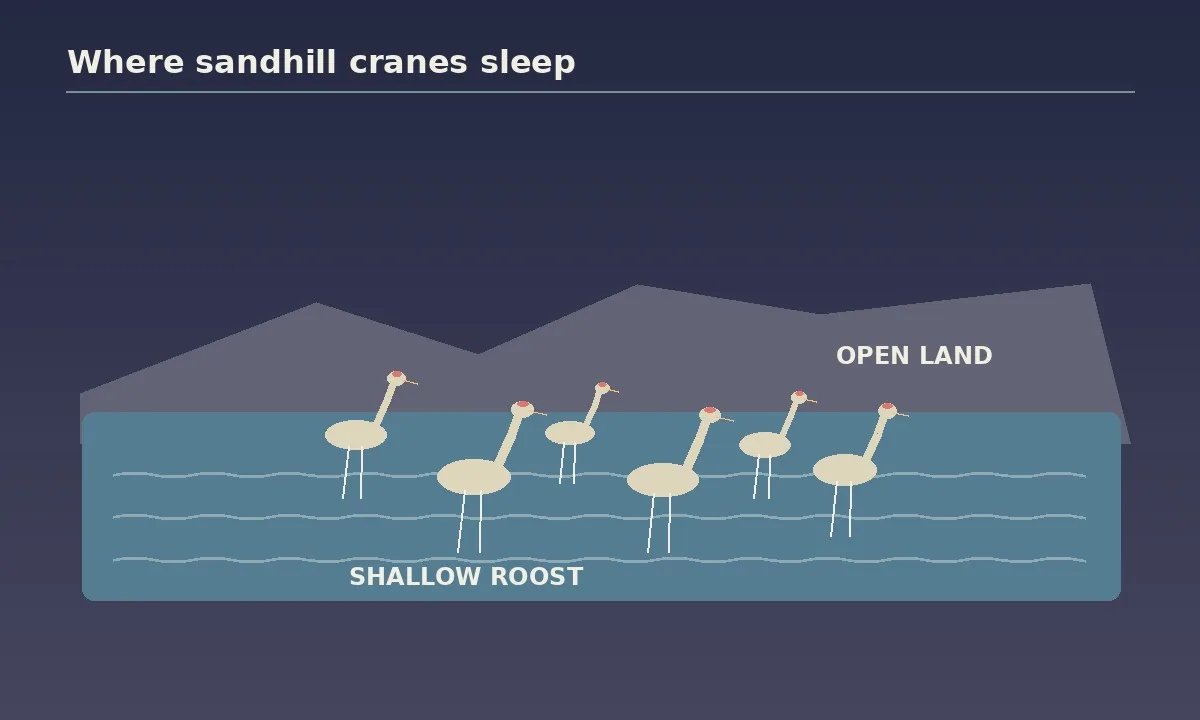
Sandhill cranes often roost overnight in shallow, open water. They can stand there, see across the wetland and hear or notice disturbances from approaching animals.
Why shallow is the useful part
A shallow pond, open sandbar or broad river channel gives cranes room to gather while keeping their feet on the bottom. Open sight lines reduce places for a land predator to approach unseen. Splashing water can also give the flock an audible cue. [2]
Night habitat and day habitat can differ
A suitable overnight roost needs the right depth and openness. During the day, cranes can fly to fields or other feeding areas to look for grain, seeds and small animals. The distance between roost and food helps explain why a patchwork of habitats can support wintering flocks. [1] [2]
When to look at Bosque del Apache
The New Mexico refuge lists mid-November through late January as its winter wildlife season. A visit around dawn can catch birds leaving overnight roosts. Dusk can reveal them returning. Check the refuge’s current wildlife information because water levels and flock locations vary. [1]
Frequently asked questions
Do cranes need deep water to roost?
Shallow water is characteristic of many winter roosts because the birds stand while resting.
Are they always in the same pond?
No. Water depth, disturbance and conditions in nearby feeding areas can influence where flocks settle.
Sources and evidence
- U.S. Fish and Wildlife Service at Bosque del Apache ↗
Seasonal viewing and daily wildlife activity at the refuge.
- Arizona Game and Fish Department ↗
Preferred winter roosts and shallow, open habitat.
Sources consulted: 12 November 2026. Written with AI assistance and checked against the linked references; not independently reviewed by a subject specialist. Sources do not endorse this article. See our editorial policy.
Revision: Initial publication.