
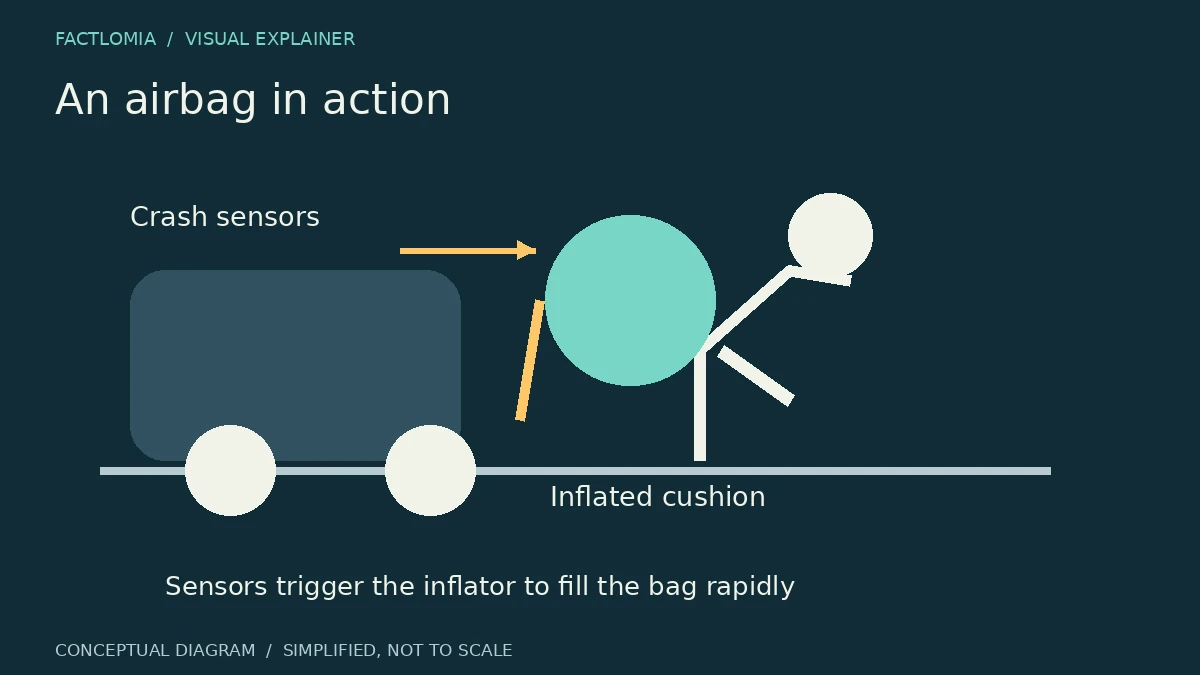
An airbag system detects crash conditions with sensors and sends an electrical signal to an inflator. In many designs, an igniter starts a rapid gas-generating reaction that fills the bag in a fraction of a second. Airbags supplement seat belts, and the system decides whether to deploy based on crash conditions rather than visible vehicle damage alone.
Sensors and a controller make the decision
The restraint controller evaluates signals from crash sensors. Airbag deployment depends on the direction and severity of the impact and the system’s design. A deployed bag is not simply the result of a bumper switch being pressed. [1]
An inflator supplies gas very rapidly
NHTSA describes an igniter starting a chemical reaction inside the inflator. The gas fills the folded bag in less than one-twentieth of a second in its general description. Inflator designs differ, so that explanation should not be read as one universal chemical recipe. [1]
Different impacts call for different protection
Frontal airbags are not meant to fire in every collision. A system may not deploy them in a minor impact or an impact from another direction. The amount of visible damage does not reliably reveal whether a particular airbag should have activated. [2]
The seat belt remains part of the system
The inflated bag helps limit contact between an occupant and the vehicle interior while the seat belt restrains the occupant. They work together. A bag that has deployed cannot be packed away for another use; it must be replaced through the appropriate repair process. [1]
Keep exploring: how noise-canceling headphones work.
Sources and evidence
- National Highway Traffic Safety Administration — Air Bags ↗
Electronic control signals, rapid gas generation, deployment timing, and the role of seat belts.
- Manufacturer Owner Documentation Hosted by NHTSA — How Airbags Work ↗
Deployment thresholds and why external vehicle damage alone does not determine deployment.
Sources consulted: 2026-10-28. Written with AI assistance and checked against the linked references; not independently reviewed by a subject specialist. Sources do not endorse this article. See our editorial policy.
Revision: First published 28 October 2026. Sources checked and original explanatory graphic added.