
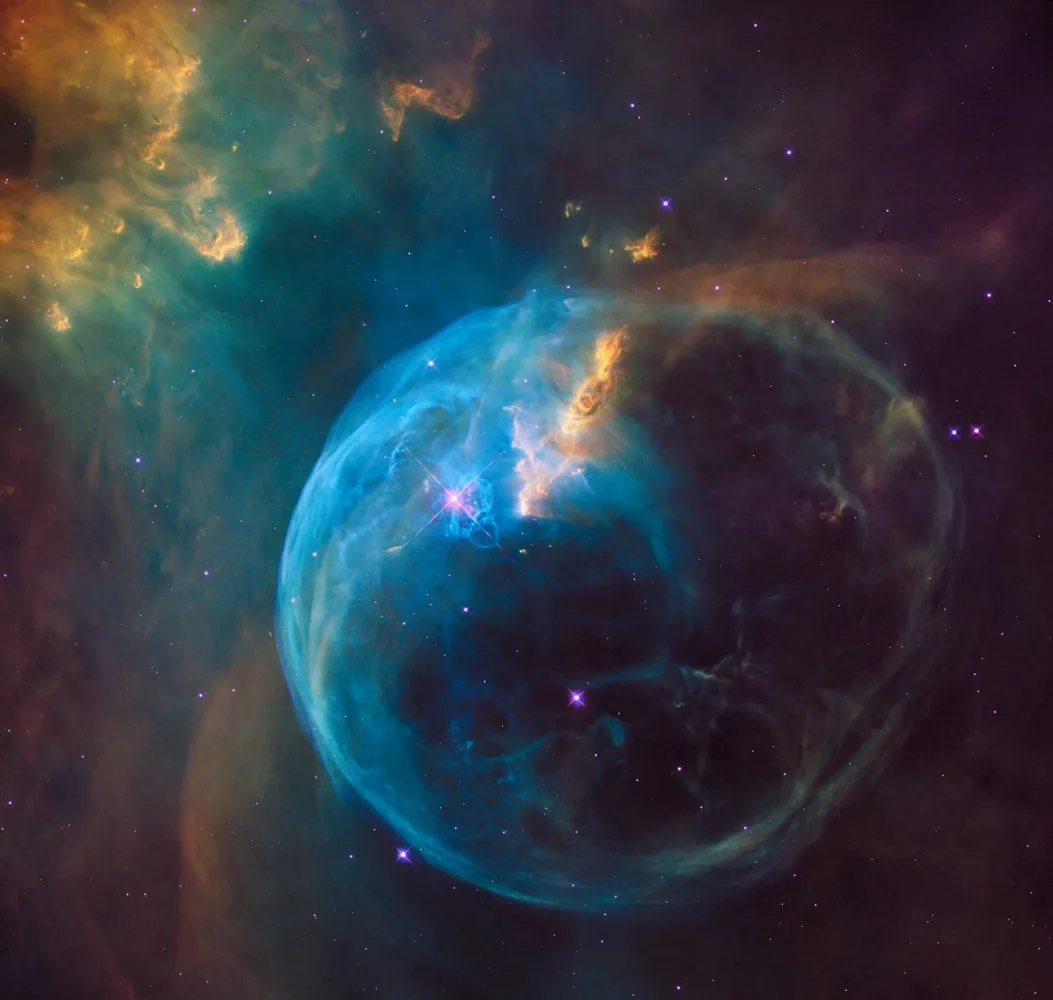
The Sun looks red or orange at sunset because its light travels through a longer slice of atmosphere. Shorter blue wavelengths are scattered out of the direct beam, so warmer colours dominate what reaches the eye.
A longer path filters the beam
When the Sun is overhead, light crosses a relatively short atmospheric path. Near the horizon, the path is much longer and passes through more molecules and particles. Blue light is scattered more strongly, reducing its share in the direct sunlight.
The remaining direct beam can look yellow, orange or red. The sky around the Sun can glow with several colours because scattered light travels in different directions.
Dust and smoke can intensify colour
Aerosols from dust, wildfire smoke or volcanic activity add larger particles that scatter and absorb light differently. They can create vivid sunsets, but they can also make the Sun appear pale or obscure it.
A colourful sunset is therefore not a simple air-quality measurement. The same particles can produce beauty and hazardous visibility conditions.
The sunset is not changing the Sun
The Sun’s surface remains extremely bright and hot; the colour shift occurs in the optical path to the observer. On another planet with a different atmosphere, the same Sun could look very different.
Sunset is a planetary light experiment: distance through gas changes which wavelengths arrive directly.
Sources and evidence
- NASA Science — Eclipses and the Moon ↗
Longer atmospheric path and red-orange sunlight.
- NOAA — Why is the sky blue? ↗
Wavelength-dependent scattering and sunset colours.
Sources consulted: 9 October 2026. Written with AI assistance and checked against the linked references; not independently reviewed by a subject specialist. Sources do not endorse this article. See our editorial policy.
Revision: Added original explanatory comparisons, source-linked evidence and a reader-focused example.