
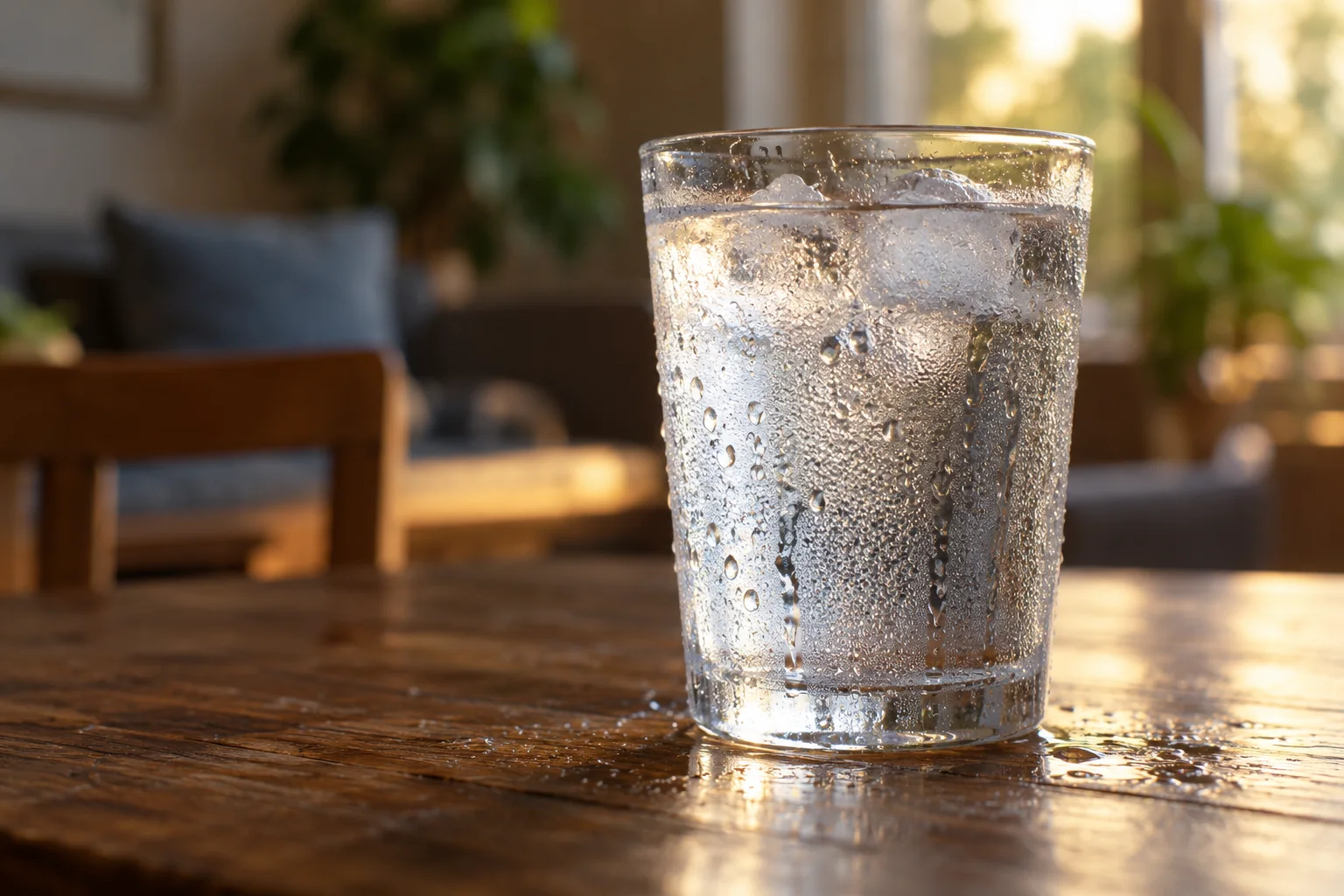
The water droplets on the outside of a cold glass come from water vapor in the air, not from the drink leaking through the glass. The cold surface cools the thin layer of air next to it. When that air reaches its dew point, water vapor condenses into droplets.
Water vapor condenses on the chilled surface
Air contains invisible water vapor. When humid air touches a cold glass, the air next to it cools. Cooler air can hold less water vapor, so some vapor becomes liquid droplets on the outside. The same process can fog eyeglasses when someone moves from a cool room into warm, humid air. [1]
Why humid days make more droplets
Warm, humid air contains more water vapor than dry air. It can therefore produce more visible condensation when it meets a cold surface. The liquid is not sweat made by the glass; the glass is where airborne moisture becomes visible.
Condensation is part of the water cycle
Condensation also helps form dew, fog, and clouds. In each case, vapor becomes liquid on a surface or around particles. The temperature at which air becomes saturated is the dew point. See how windows fog up and why fog forms near the ground.
Frequently asked questions
Frequently asked questions
Does the water come through the glass?
No. It usually comes from water vapor in surrounding air condensing on the cold surface.
Why is the glass wetter in humid weather?
Humid air contains more water vapor that can condense when cooled.
Is this the same as dew?
Yes. Both involve water vapor cooling and condensing into droplets.
Sources and evidence
- USGS — Condensation and the Water Cycle ↗
Explains condensation on a cold glass, eyeglasses, and windows.
- NOAA — The Hydrologic Cycle ↗
Uses a cold drink container to explain condensation.
- NOAA NESDIS — What Is Humidity? ↗
Explains water vapor and condensation on cool surfaces.
Sources consulted: 2026-10-18. Written with AI assistance and checked against the linked references; not independently reviewed by a subject specialist. Sources do not endorse this article. See our editorial policy.
Revision: Initial editorial draft prepared 18 October 2026; claims are tied to linked sources and retain stated limitations.