
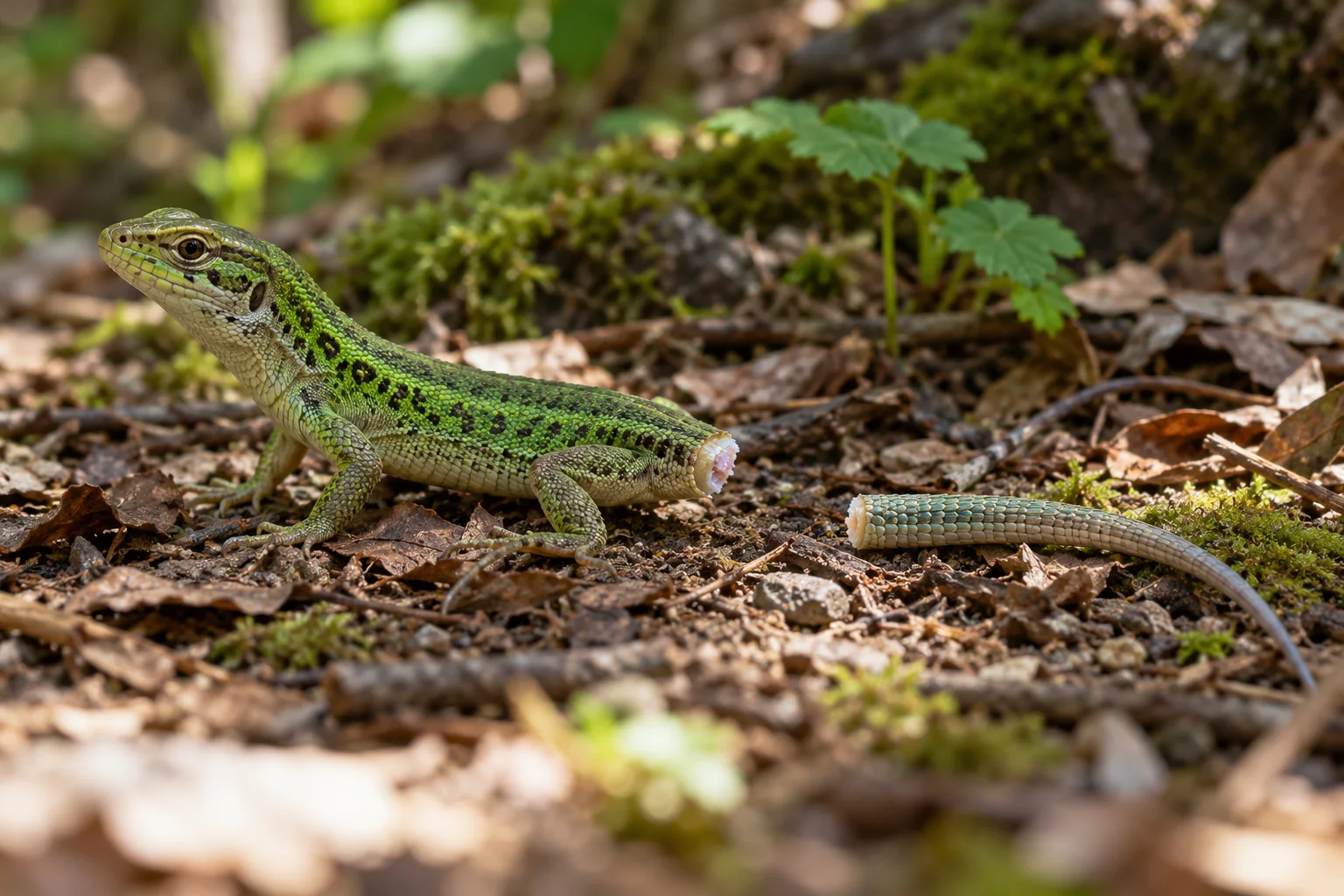
Some lizards can shed part of their tail when a predator grabs it. The detached tail may continue twitching, drawing attention while the lizard escapes. Many species can regrow a tail, but a replacement may differ in shape, color, bones, or function. Tail shedding and regrowth vary among species.
A tail can separate at prepared break points
In many species, the tail contains fracture planes that allow it to detach when force is applied. Muscles constrict blood vessels to limit bleeding, and the lizard moves away while the detached tail twitches. This defense is called autotomy. Losing a tail costs energy and may affect balance, movement, and stored fat. [1]
Regrowth is not a perfect replacement
Many lizards regenerate tissue through wound healing and growth. A replacement tail may contain a cartilage rod instead of the original vertebrae and can look or function differently. Regenerative ability varies with species, age, and injury; some reptiles cannot regrow a tail in the same way. [2]
Why a lizard may keep its tail
A lizard may not shed a tail if it is not grabbed near a break point or if escape does not require it. The tail can store fat and help with balance. Tail regrowth is not instant. Learn how geckos grip surfaces and how cats land on their feet.
Frequently asked questions
Frequently asked questions
Does a lizard’s tail grow back exactly the same?
Usually not. Regenerated tails may differ in structure, shape, color, and function.
Can every lizard drop its tail?
No. Autotomy and regeneration vary by species.
Does dropping its tail hurt the lizard?
Tail loss is an injury and costly defense. It should never be induced or tested.
Sources and evidence
- Smithsonian National Zoo — Northern Blue-tongued Skink ↗
Notes tail shedding as an escape behavior and eventual regrowth.
- PMC — The Regeneration Blastema of Lizards ↗
Reviews tail regeneration and species differences.
- Smithsonian — Geckos: The Animal Answer Guide ↗
Reference on tail loss and regeneration in geckos.
Sources consulted: 2026-10-18. Written with AI assistance and checked against the linked references; not independently reviewed by a subject specialist. Sources do not endorse this article. See our editorial policy.
Revision: Initial editorial draft prepared 18 October 2026; claims are tied to linked sources and retain stated limitations.